What Do I Do If I Damage My Dentures?
 Clinically reviewed by Dr. Kamran Fattah, DMD
Dentures are durable, but they can crack, chip, lose a tooth, or stop fitting well. If something happens to yours, don't panic: most problems can be repaired or adjusted. Scottsdale Family Smiles can answer your questions about denture care. Call (480) 607-6937 to schedule an appointment.
Repairing Damaged Dentures
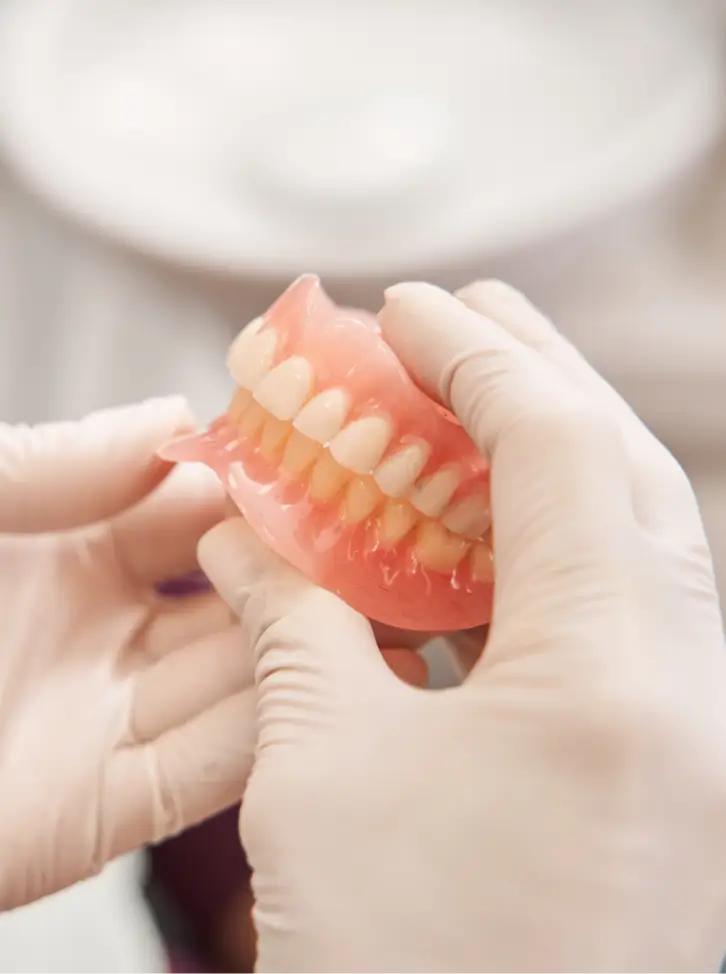
If your dentures are damaged, call us so we can examine them and find the best way to fix them. Many repairs, like a cracked base or a lost tooth, can be done by a dental lab, often within a short time. If your denture is old or badly damaged, a new one may be the better choice.
Keep in mind that new dentures usually need one or several adjustments in the first weeks. A sore spot or a loose feeling is common and doesn't mean you did something wrong.
Dentures that suddenly feel loose may also mean your gums and bone have changed, which happens gradually over time. A reline reshapes the inside of the denture to fit snugly again.
If you've damaged your dentures, call us at (480) 607-6937. We'll see you as soon as we can. See Emergency Dentist.
What to Do at Home
- Save the pieces. Gather every broken piece, including any wire or clasp, and bring them with you.
- Protect your gums. If a clasp is bent and rubbing your gums, take the denture out. Orthodontic wax over a sharp edge can help short-term.
- Take them out. Don't keep wearing a broken denture; it can injure your gums or break further. Store it in a case or in water so it doesn't dry out.
What Not to Do
- Don't use super glue or household glue. These aren't made for use in the mouth, can contain irritating chemicals, and make a proper lab repair harder.
- Don't try to bend clasps or reshape the denture yourself.
- Be cautious with home repair kits. A poor repair can change your bite or make professional repair harder. Use them only for a short time if you can't see us right away.
Preventing Damage
- Clean your dentures over a folded towel or a sink of water so they won't break if dropped.
- Brush them daily with a soft brush and a non-abrasive cleaner, not regular toothpaste, which can scratch them.
- Take them out at night to give your gums a rest, and keep them moist.
- Avoid hot water, which can warp them.
Alternatives to Traditional Dentures
If you'd like something more stable, implants can help.
- Implant-supported dentures snap onto implants, so they stay put when you eat and speak. Research shows that a lower denture held by even two implants greatly improves chewing and comfort.
- All-on-4 replaces a full arch with a fixed bridge on four implants that you don't remove.
- Dental implants can replace individual teeth. Dr. Fattah has made ceramic, metal-free implants an emphasis of his education and practice, and he also places titanium implants.
- Bridges can replace one or a few teeth if the neighboring teeth are strong.
See Options for Replacing Missing Teeth and Will I Be Able to Eat With My New Dentures?.
Sources
- Feine JS, Carlsson GE, Awad MA, et al. The McGill consensus statement on overdentures. Gerodontology. 2002;19(1):3-4.
- Felton D, Cooper L, Duqum I, et al. Evidence-based guidelines for the care and maintenance of complete dentures. J Prosthodont. 2011;20(Suppl 1):S1-S12.
Ready to Visit?
Call or text us, or request an appointment online.