Nuvola Orthodontics
Clear aligners with a functional appliance to develop the arches and make room for the tongue, for children and adults in Scottsdale, AZ
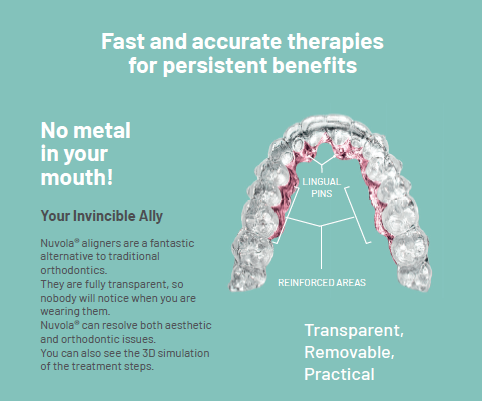
Straight teeth are only part of a healthy bite. When the upper jaw is narrow, the tongue has nowhere to rest, teeth crowd, and breathing through the nose can be harder. Nuvola is a proprietary clear aligner system with a functional appliance. Dr. Kamran Fattah uses it to expand the arches, develop the upper jaw (maxilla), and support proper tongue function, creating more room for the tongue. It allows greater expansion than traditional braces or Invisalign, and it also supports cranial balancing and facial symmetry, which other options do not.
Book a Nuvola Consultation- What is Nuvola?
- How it works
- Room for the tongue
- Nuvola for children
- Teens & adults
- Compared
- Your treatment
- Case examples
- FAQ
Key takeaways
- Nuvola pairs clear aligners with a functional appliance called Freedom.
- It is designed to expand the arches and develop the upper jaw, not only straighten teeth.
- Lingual pins in the aligners train the tongue to rest on the palate.
- Children can start as young as about 4; teens and adults can be treated too.
- Every plan starts with an airway, tongue, and bite evaluation; results vary from person to person.
What Is Nuvola?
Nuvola is an orthodontic system from Italy, in use since 2019, and the first aligner system designed to be used together with a myofunctional (muscle-training) device. It has two parts:
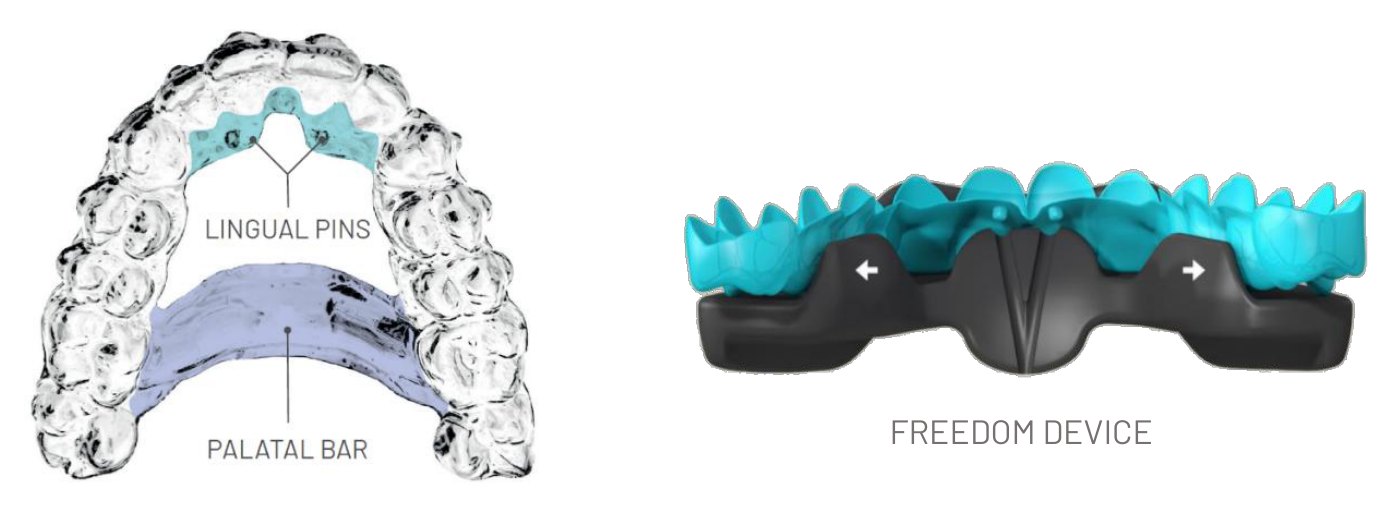
- Nuvola Pro aligners move the teeth with light, steady pressure, like other clear aligners. They have reinforced areas along the palate and small lingual pins that show the tongue where to rest. For children, a palatal bar can be added for extra expansion.
- The Freedom device is a soft appliance you bite on for about 30 minutes a day with your aligners in. Its flexible zones turn chewing into gentle, rhythmic pressure on the palate, and its front shield encourages the lips to close so you breathe through your nose.
Steady Forces Plus Natural, Cyclical Ones
Traditional orthodontics relies on light, constant forces to move teeth. But the body shapes bone with forces that come and go: chewing, swallowing, and breathing. Nuvola combines both. The aligners provide the steady force, and daily use of the Freedom device adds the rhythmic force of the chewing muscles, transmitted through the palate. The goal is to develop the whole upper arch, not just tip the teeth outward.
Expands the arches
Widens and rounds out narrow upper and lower arches to make room for crowded teeth, often without removing healthy teeth.
Trains the tongue
Lingual pins guide the tongue up to its resting spot behind the front teeth, where it naturally supports the width of the palate.
Supports nasal breathing
The Freedom device's front shield encourages a lip seal, and a broader palate is also the floor of the nose.
Making Room for the Tongue
The tongue is meant to rest against the roof of the mouth. When it does, it acts as a natural expander for the upper jaw. When it rests low, often because of a tongue tie, mouth breathing, or habits, the upper jaw tends to grow narrow and the soft palate longer, leaving less room for the tongue and the airway.
That is why Nuvola works on both form and function. As the arch develops, the tongue gets room to rise, and the pins and Freedom exercise teach it to stay there. Before treatment, Dr. Fattah checks tongue mobility and, when needed, recommends a tongue tie release or myofunctional therapy alongside Nuvola.
Nuvola for Children
About 85% of adult jaw size is reached by age 5, so early guidance can make a real difference. Nuvola Junior is designed for children from about age 4 while they still have their baby teeth or are just starting to get adult teeth. It is often used for:
- A narrow upper jaw (palatal expansion)
- Front or back crossbites and open bites
- Asymmetries of the jaws
- Mouth breathing and chewing problems
- Tongue-thrust (atypical) swallowing
Children wear the aligners all night plus at least 2 hours during the day and use the smaller Freedom Mini for about 30 minutes a day, with lips closed and tongue up. Treatment typically lasts up to about 12 months with baby teeth and up to about 18 months in early mixed dentition. Nuvola is often part of a broader kids' airway and breathing plan.
Book a Children's Airway Evaluation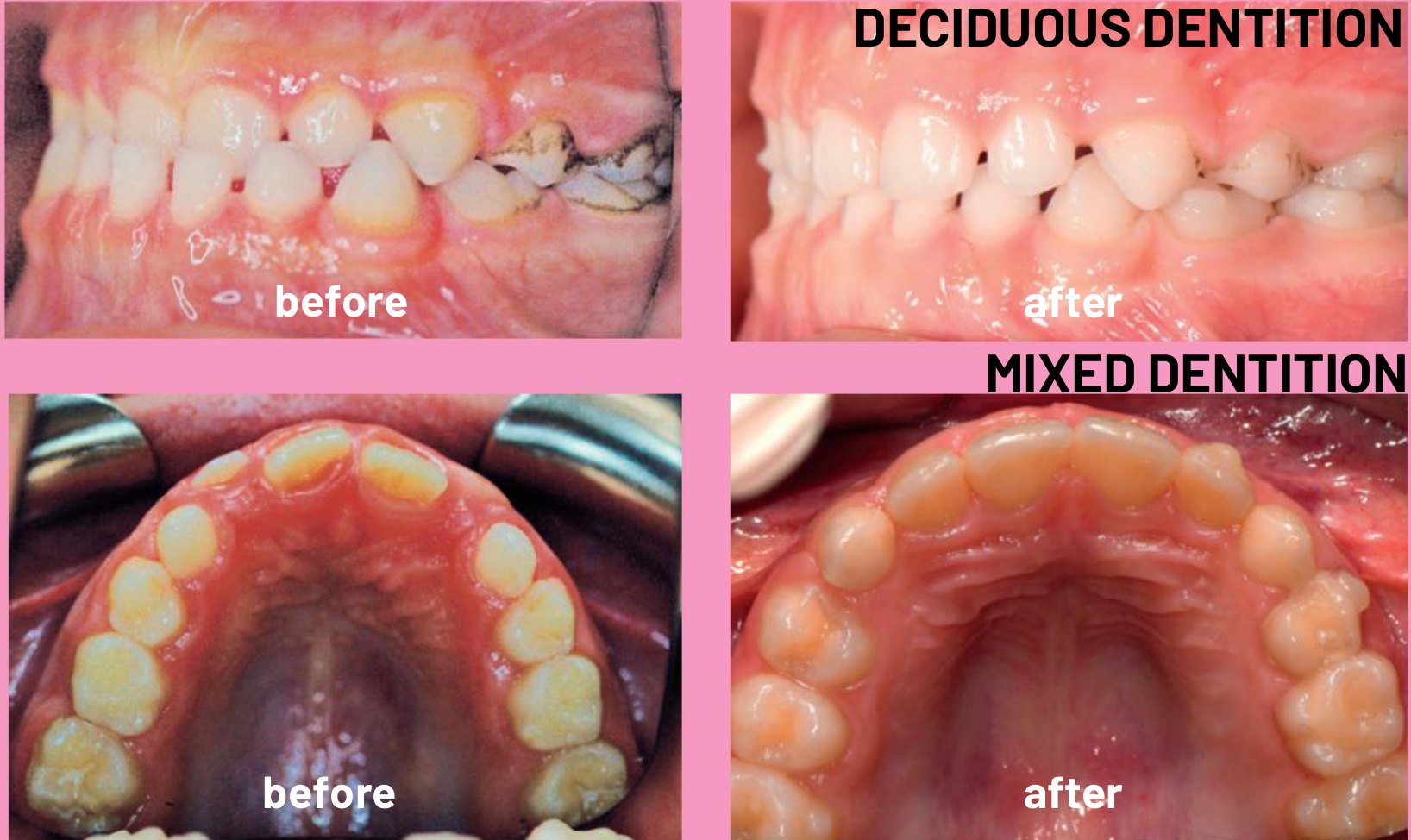
Nuvola for Teens and Adults
Adults can't grow a jaw the way a child can, but the upper arch can still be developed. Nuvola is a good fit for teens and adults with crowding from a narrow arch, a low tongue posture, or a bite that never quite fit. Adults wear the aligners about 20 hours a day and bite on the Freedom device for 30 minutes a day with the aligners in, which engages the chewing muscles. Teens who need arch development can choose Nuvola instead of Invisalign Teen.

Nuvola Compared With Other Options
| Main goal | Tongue & muscle training | What it looks like | |
|---|---|---|---|
| Nuvola | Arch development and jaw growth guidance, plus alignment | Built in: lingual pins and the Freedom device | Clear, removable |
| Invisalign | Straightening teeth; expansion is mostly dental | Not part of the system | Clear, removable |
| Traditional braces | Straightening teeth and aligning the bite | Not part of the system | Brackets and wires |
| Palatal expander | Widening the upper jaw in growing children | Not by itself | Fixed appliance on the palate |
These options aren't mutually exclusive. Some children start with a slow palatal expander and continue with aligners, and adults with sleep-disordered breathing may combine arch development with Vivos or other CPAP alternatives.
Your Nuvola Treatment
- Evaluation. We look at your bite, jaws, tongue mobility, breathing, and posture. If a sleep or breathing problem is suspected, we may recommend a sleep study.
- Records. A 3D scan of both arches and palate, photos of your teeth and face, and X-rays, so the plan is built on precise measurements.
- Your first aligners. We fit your aligners and teach your tongue to find its resting spot on the pins.
- Adding Freedom. After the first few weeks, you start the daily 30-minute Freedom exercise.
- Progress visits. You move to a new set of aligners about every 10 to 14 days, with regular check-ins to track expansion and function.
- Finishing. We review results and discuss retention and any next steps.
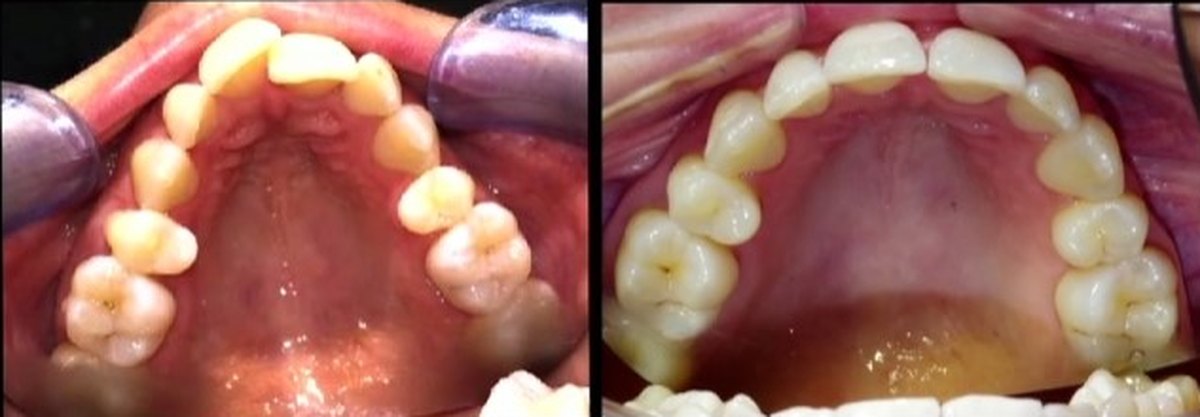
Nuvola Case Examples
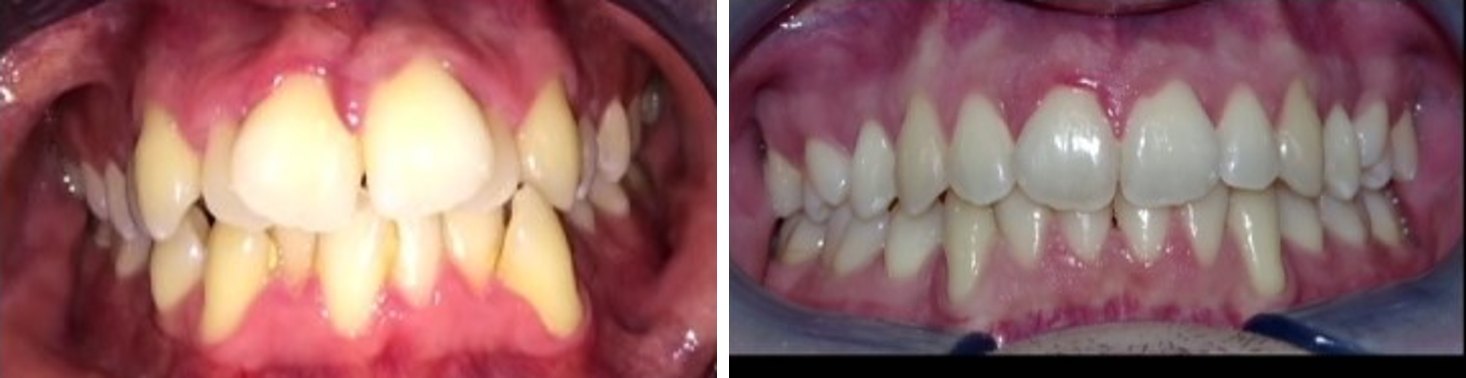
These cases were shared by Nuvola and the doctor credited, to show the kind of arch development the system is designed for. Every mouth is different, and your results depend on your age, anatomy, and how consistently the aligners and Freedom device are worn.
What Our Patients Say
“I took my son in for a consultation concerning his palette and airway. … This kind of dentistry should be more mainstream because it gets down to root causes. … I appreciate that Dr. Fattah doesn’t advocate pulling healthy teeth to make room to move around the teeth for a more straight smile.”
“They are helping my child expand their palate and I can already see a hugh difference.”
“The care my daughters received was great, working to correct malocclusion and correctly form her jaw has saved her from many potential future problems including avoiding braces in the future.”
★ 5.0 on Google from 440+ reviews · Read more patient reviews
Nuvola FAQ
Is Nuvola the same as Invisalign?
No. Both use clear, removable aligners, but Nuvola is a proprietary system that pairs its aligners with a functional appliance called Freedom. The aligners also include lingual pins that train the tongue to rest on the palate. Nuvola is designed to develop the arch and support healthy function, not only to straighten teeth.
Who is a good candidate for Nuvola?
Children from about age 4, teens, and adults with a narrow or underdeveloped upper jaw, crowding, crossbites, open bites, asymmetries, a low tongue posture, or mouth breathing may benefit. Whether Nuvola is right for you depends on your exam, records, and goals, which Dr. Fattah reviews with you at your consultation.
Does Nuvola treat sleep apnea?
Nuvola is not a stand-alone treatment for sleep apnea. Research shows that developing the upper jaw can improve nasal breathing and, in children, reduce the size of the tonsils and adenoids, and Nuvola is designed to support those goals. Studies on Nuvola specifically for sleep apnea are still to come. If sleep apnea is suspected, a sleep study comes first, and Nuvola may be one part of a broader plan.
How long does Nuvola treatment take?
It depends on age and what needs to change. Young children with baby teeth typically finish in up to about 12 months, and children in early mixed dentition in up to about 18 months. Teen and adult timelines are set by your treatment plan.
How many hours a day do the aligners need to be worn?
Adults wear the aligners about 20 hours a day. Children wear them all night plus at least 2 hours during the day, with more daytime wear for older children. Everyone uses the Freedom device for about 30 minutes a day.
Does Nuvola hurt?
Like other aligners, a new set can feel snug for a day or two. The Freedom exercise works the chewing muscles, which can feel like a mild workout at first.
Why does the tongue matter in orthodontics?
When the tongue rests against the palate, it gently supports the width of the upper jaw. A low tongue posture, often linked to a tongue tie or mouth breathing, is associated with a narrower upper jaw and a longer soft palate. Nuvola's lingual pins guide the tongue to its resting spot. If a tongue tie is limiting movement, a tongue tie release may be recommended alongside treatment.
Will my child need a retainer afterward?
Dr. Fattah will discuss retention with you at the end of treatment based on your child's growth, habits, and results.
Is Nuvola covered by insurance?
Orthodontic coverage varies by plan. We can check your benefits, and we offer financing through Cherry to spread out the cost.
Related Services
Is Nuvola Right for You or Your Child?
Book a consultation with Dr. Fattah to evaluate your jaws, tongue, and breathing, and find out whether Nuvola fits your goals.
This page is for patient education and is not medical advice. Nuvola, Nuvola Pro, Nuvola Junior, and Freedom are trademarks of their owner. Case photos are courtesy of Nuvola and Dr. Simona Bussu and are not Scottsdale Family Smiles patients. Diagnosis and treatment decisions should be made with your dentist and physician based on your individual exam and health history.