Laser Gum Therapy in Scottsdale, AZ
Gum Disease & Periodontal Treatment
 Clinically reviewed by Dr. Kamran Fattah, DMD
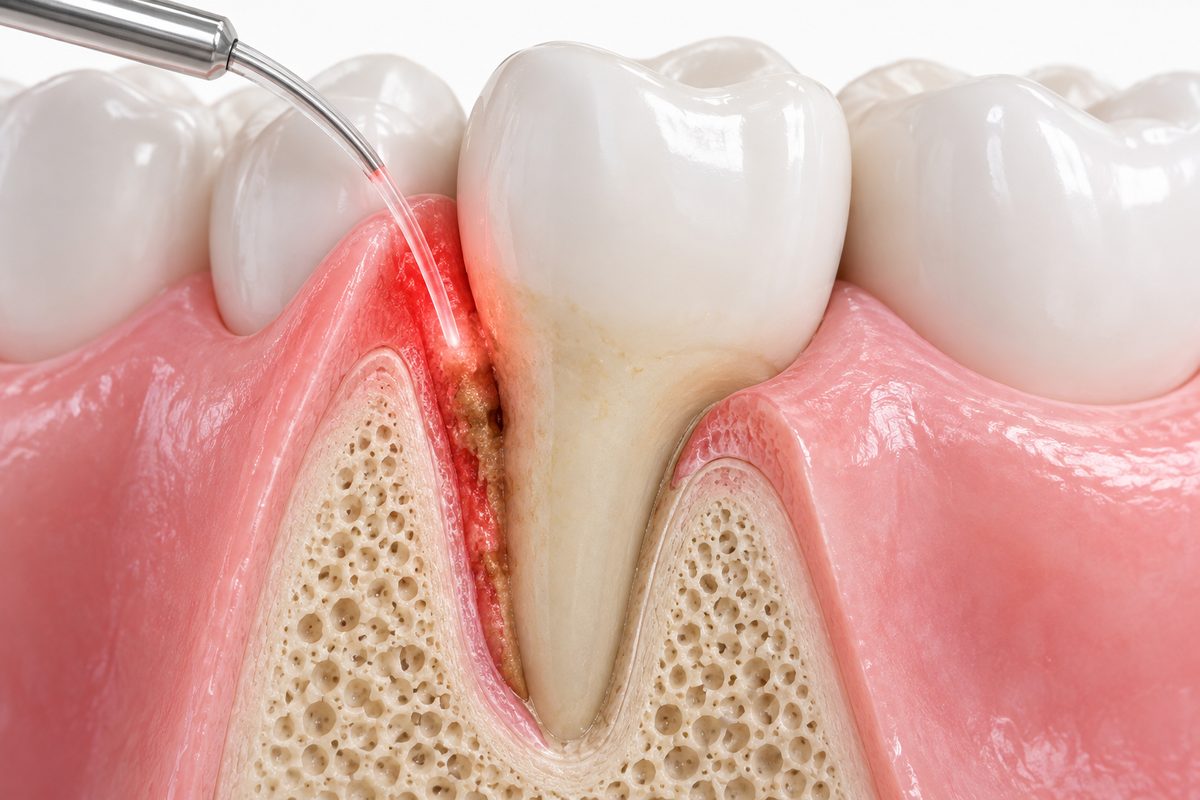
Gum disease is the leading cause of adult tooth loss, and it's often silent until it's advanced. Laser gum therapy treats it with precise light energy instead of a scalpel, removing infected tissue and bacteria while sparing healthy gum, for a gentler experience and faster healing.
Dr. Fattah treats gum disease with the Fotona LightWalker, a dual-wavelength dental laser, combined with thorough deep cleaning, ozone therapy, and photobiomodulation to support healing. Call (480) 607-6937 for a gum health evaluation.
Book a Gum Health Evaluation- What is gum disease?
- Warning signs
- How laser therapy works
- Laser vs. traditional surgery
- Your treatment
- The research
- Recovery
- FAQ
Key takeaways
- Nearly half of U.S. adults over 30 have some form of periodontitis, according to CDC research.
- The Fotona LightWalker laser removes diseased tissue and bacteria precisely, without cutting and stitching healthy gum.
- Laser therapy is combined with a thorough deep cleaning, ozone, and photobiomodulation for healing.
- Most patients return to normal activities the same or next day.
- Gum health matters beyond the mouth. Periodontitis is linked with diabetes and heart disease.
What Is Gum Disease?
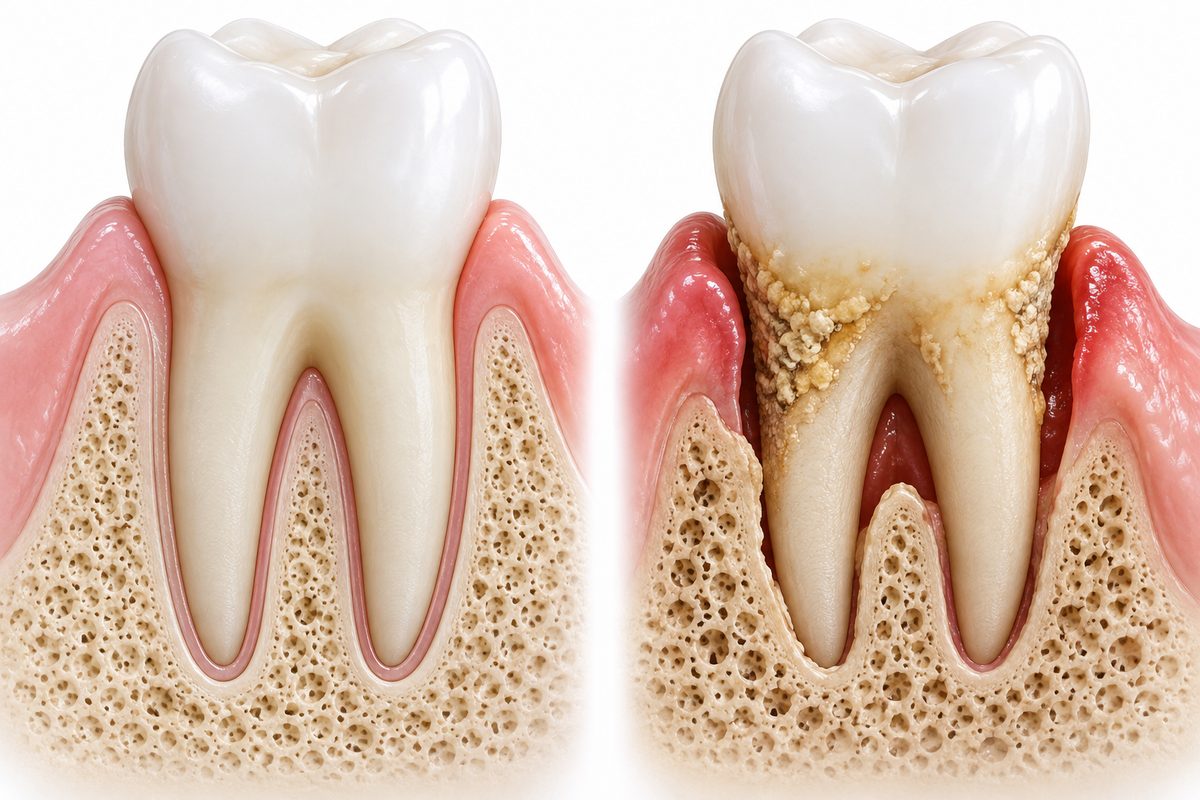
Periodontal (gum) disease is a chronic infection and inflammation of the tissues that hold your teeth in place. It begins when bacterial plaque builds up along and under the gumline.
- Gingivitis is the earliest stage: red, swollen gums that bleed when you brush or floss. It's reversible with professional cleaning and good home care.
- Periodontitis develops when inflammation reaches deeper. Gums pull away from the teeth to form pockets, bacteria thrive inside them, and the bone supporting the teeth is gradually lost. Without treatment, teeth can loosen and fall out.
Gum disease is also an inflammatory burden on the whole body. Research links periodontitis with diabetes and cardiovascular disease, which is one reason it's central to our biological approach.
Do You Have Signs of Gum Disease?
Gum disease is often painless. See us if you notice any of these:
Bleeding Gums
Bleeding when you brush or floss is the most common early sign. Healthy gums don't bleed.
Red, Swollen, or Tender Gums
Inflammation makes gums puffy, dark red, or sore to the touch.
Persistent Bad Breath
Bacteria in deep pockets can cause bad breath or a bad taste that brushing doesn't fix.
Receding Gums
Teeth look longer, or you notice sensitivity at the gumline. See Receding Gums.
Loose or Shifting Teeth
Bone loss can make teeth feel loose or change how your bite fits together.
Higher-Risk Health Factors
Smoking, diabetes, pregnancy, stress, and some medications raise your risk.
How Laser Gum Therapy Works
The Fotona LightWalker combines two laser wavelengths, each suited to a different job:
- Er:YAG energy gently removes tartar and diseased tissue from root surfaces and pockets with minimal heat.
- Nd:YAG energy reaches deeper into the tissue to reduce bacteria and seal the treated area.
After treatment, we may use photobiomodulation, low-level red light therapy. In laboratory studies, red light at the wavelengths we use reduced inflammation and supported the growth of gum and bone-forming cells. We use it to help calm inflammation and support healing. Combined with ozone, it creates a cleaner environment for the gums to reattach.
Laser Therapy vs. Traditional Gum Surgery
| Laser-assisted therapy | Traditional flap surgery | |
|---|---|---|
| Technique | Laser energy treats the pocket; little or no cutting | Gums are cut and folded back, then stitched |
| Comfort | Typically less discomfort and swelling | More post-operative soreness |
| Bleeding | Minimal; the laser helps seal tissue | More bleeding |
| Recovery | Usually back to normal in a day or two | Often a week or more |
| Gum recession afterward | Tends to preserve more gum tissue | Gum recession is common |
| Best for | Many cases of mild to moderate periodontitis | Some advanced cases with complex bone defects |
Some advanced cases still benefit from surgery or referral to a periodontist. We'll tell you honestly which approach gives you the best chance of keeping your teeth.
Your Laser Gum Treatment
- Gum health evaluation. We measure pocket depths around every tooth, check for bleeding and mobility, and take X-rays to assess bone levels.
- Your plan. We explain the stage of disease, your options, the number of visits, and the cost.
- Comfort first. The area is numbed with local anesthetic so you stay comfortable.
- Deep cleaning. Tartar and bacterial deposits are removed from the roots with ultrasonic and hand instruments.
- Laser treatment. The LightWalker removes diseased tissue, reduces bacteria, and prepares the pocket to heal.
- Ozone and photobiomodulation. Ozone disinfects the area, and low-level light therapy is used to help calm inflammation and support healing.
- Re-evaluation and maintenance. We re-measure your pockets after healing and set a cleaning schedule, often every three to four months, to keep the disease under control.
What the Research Says
Lasers are valued for patient comfort and precision. The American Academy of Periodontology reviewed the evidence in 2018 and concluded that lasers used alongside conventional deep cleaning may provide a modest additional improvement in pocket depth and gum attachment, and that more high-quality research is needed.
That's why we use the laser as part of a complete protocol, not as a substitute for thorough cleaning and good home care. The foundation of long-term gum health is always the same: removing bacterial deposits, controlling risk factors, and consistent maintenance.
Recovery & Healing
- Same or next day: most patients return to normal activities. Mild tenderness is managed with over-the-counter pain relief.
- First few days: soft foods and gentle brushing around treated areas, plus any rinse we recommend.
- Weeks ahead: the gums tighten and reattach. Pockets are re-measured after healing.
- Long term: daily brushing and flossing, regular maintenance cleanings, and not smoking.
Risks and Limitations
- Temporary sensitivity, tenderness, or slight swelling
- Some gum recession as inflammation resolves, so teeth may look slightly longer
- Gum disease is chronic. It can return without maintenance.
- Advanced cases may still need surgery, grafting, or a specialist referral
Why Gum Health Matters for Your Whole Body
Gum disease is more than a mouth problem. Research links it with conditions throughout the body. Most of these studies show an association rather than proven cause, but they're a good reason not to ignore bleeding gums.
Diabetes
High blood sugar and gum inflammation worsen each other. In people with type 2 diabetes, gum treatment modestly lowers long-term blood sugar (HbA1c).
Heart & blood vessels
The American Heart Association found gum disease is linked to hardening of the arteries, independently of shared risk factors such as smoking, though cause hasn't been proven.
Joints
The gum bacterium P. gingivalis can alter proteins in a way that may trigger the same antibodies found in rheumatoid arthritis, a link researchers are actively studying.
Benefits, Limitations and Alternatives
Potential benefits
- Little or no cutting of the gums
- Most people return to normal activities quickly
- Targets bacteria in the gum pockets
- Can be repeated when needed
Limitations and risks
- Gum disease is chronic, so regular cleanings and home care are still needed
- Advanced bone loss may still need surgery or a referral to a periodontist
- Smoking and diabetes can slow healing
- Research on lasers is still developing, as described above
Alternatives
- Scaling and root planing alone
- Traditional gum surgery with a periodontist
- Antibiotics placed in the gum pockets
What Our Patients Say
“I needed a deep cleaning and 3 teeth removed. I bravely did the procedure fully awake with numbing. Dr. Fattah was reassuring and gentle. I hardly felt a thing!”
“Just had my first cleaning as well and it was the best most detailed cleaning I’ve ever had!”
“You don't even feel any of the work she's doing in your mouth”
★ 5.0 on Google from 440+ reviews · Read more patient reviews
Laser Gum Therapy FAQ
Does laser gum therapy hurt?
The area is numbed, so treatment is comfortable. Afterward, most patients report less soreness and swelling than with traditional gum surgery, and many need only over-the-counter pain relief.
Is laser gum therapy better than scaling and root planing?
It isn't a replacement. The laser is used together with a thorough deep cleaning. Research shows the combination can provide a modest added benefit, along with greater comfort.
How long does it take to heal?
Most people return to normal activities the same or next day. The gums continue to heal and tighten over several weeks, and we re-measure pockets after healing.
Can gum disease be cured?
Gingivitis is reversible. Periodontitis can be brought under control and kept stable, but because it's a chronic condition, regular maintenance visits are essential to prevent it from returning.
Can lasers treat infection around a dental implant?
Laser and ozone can help clean and disinfect the area around an implant affected by peri-implantitis, as part of a broader treatment plan.
Is laser gum therapy covered by insurance?
Periodontal treatment is often partially covered. Coverage for the laser portion varies. We'll check your benefits and provide a clear estimate before treatment.
Related Services
Healthy Gums, Healthy Body
Bleeding or tender gums? Schedule a gum health evaluation with Dr. Fattah and find out whether laser gum therapy is right for you.
This page is for patient education and is not medical advice. Diagnosis and treatment decisions should be made with your dentist and physician based on your individual exam and health history.