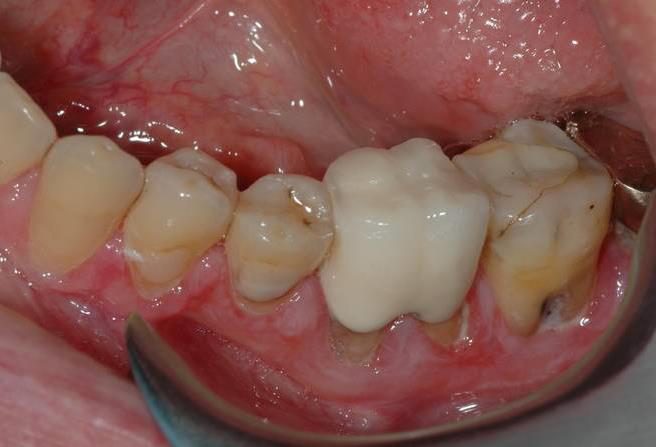
If you have a deep cavity, gum disease that keeps coming back, or you're healing after oral surgery, you may be looking for care that treats infection while keeping as much of your own tooth and tissue as possible. That is the aim of biological dentistry, and medical ozone is one of the tools we use for it.
Ozone is a highly active form of oxygen. It can be applied as a gas, dissolved in water, or carried in oil or glycerin to disinfect, cleanse wounds, and support healing in teeth, gums, and bone.
This page explains how dental ozone is used and what published research reports, so you can make an informed decision with your dentist.
Request AppointmentKey takeaways
- Ozone (O3) is used in dentistry mainly as a disinfectant and to support wound healing.
- It can be delivered as ozonated water, ozone gas, ozonated olive oil, or ozonated glycerin.
- Clinical studies report benefits in gum disease and deep cavities; other uses are supported mainly by case reports.
- Ozone gas must never be inhaled, and some medical conditions rule it out, so it is used only after a full health review.
What Is Ozone?
Ozone is a molecule made of three oxygen atoms (O3) instead of the usual two (O2). In nature it forms when oxygen is energized by sunlight or lightning. That's the fresh smell in the air after a thunderstorm.
In the dental office, a medical ozone generator does the same thing with electricity. It passes pure medical-grade oxygen through an electrical field to produce a precise, measured concentration of ozone. Ozone is unstable, so it soon breaks back down into ordinary oxygen.

3 O2 + energy → 2 O3 → back to O2
How Ozone Works in the Mouth
The lecture this page draws on describes four main biological effects of ozone. They are summarized below in plain language. Open "The science" for the technical detail.
Antimicrobial
Ozone oxidizes bacteria, viruses, and fungi. Ozonated water is used to help break up plaque biofilm.
Immune-supporting
Ozone is reported to activate immune cells that clear germs and to help regulate inflammation.
Oxygenating
Ozone is described as improving oxygen delivery to tissues, which healing depends on.
Tissue repair
Ozone is described as stimulating cell energy and protein synthesis involved in regeneration.
How Ozone Is Applied
Each form of ozone suits a different situation, from rinsing a gum pocket to treating a cavity or an extraction site.
Irrigation
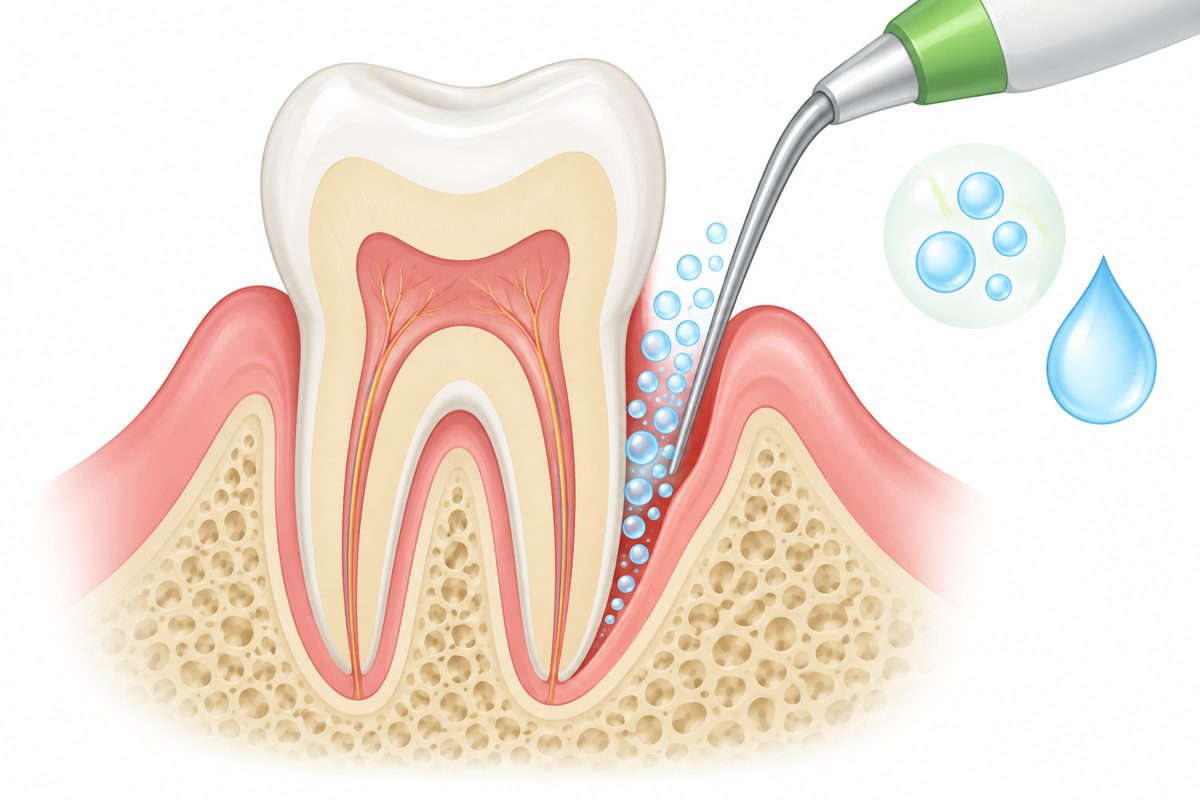
Rinsing gum pockets, cavities, root canals, and surgical sites with freshly made ozonated water, sometimes with an ultrasonic instrument.
Insufflation
Gently blowing ozone gas into gum pockets. A thin probe is placed at the base of the pocket and ozone is released slowly as it is withdrawn.
Infusion
Small, measured volumes of ozone gas infiltrated into gum or bone around an infected tooth or implant.
Tray therapy
A custom tray over the teeth and gums holds ozone against the tissues while a suction system safely captures any excess.
Ozonated oil
Ozonated olive oil applied to soft tissue to cover and protect healing areas.
Ozonated glycerin
A remineralizing antibacterial spray or rinse made with ozonated glycerin, bicarbonate, activated calcium and phosphate, arginine, and xylitol, designed to support an alkaline mouth environment.
What Ozone Is Used For
A 2019 review in Medical Gas Research notes that ozone therapy has been used for wound healing, dental caries, oral lichen planus, gingivitis and periodontitis, halitosis, osteonecrosis of the jaw, post-surgical pain, plaque and biofilms, root canals, dentin hypersensitivity, temporomandibular joint disorders, and teeth whitening. Here are the main uses shown in the lecture.
Deep Cavities
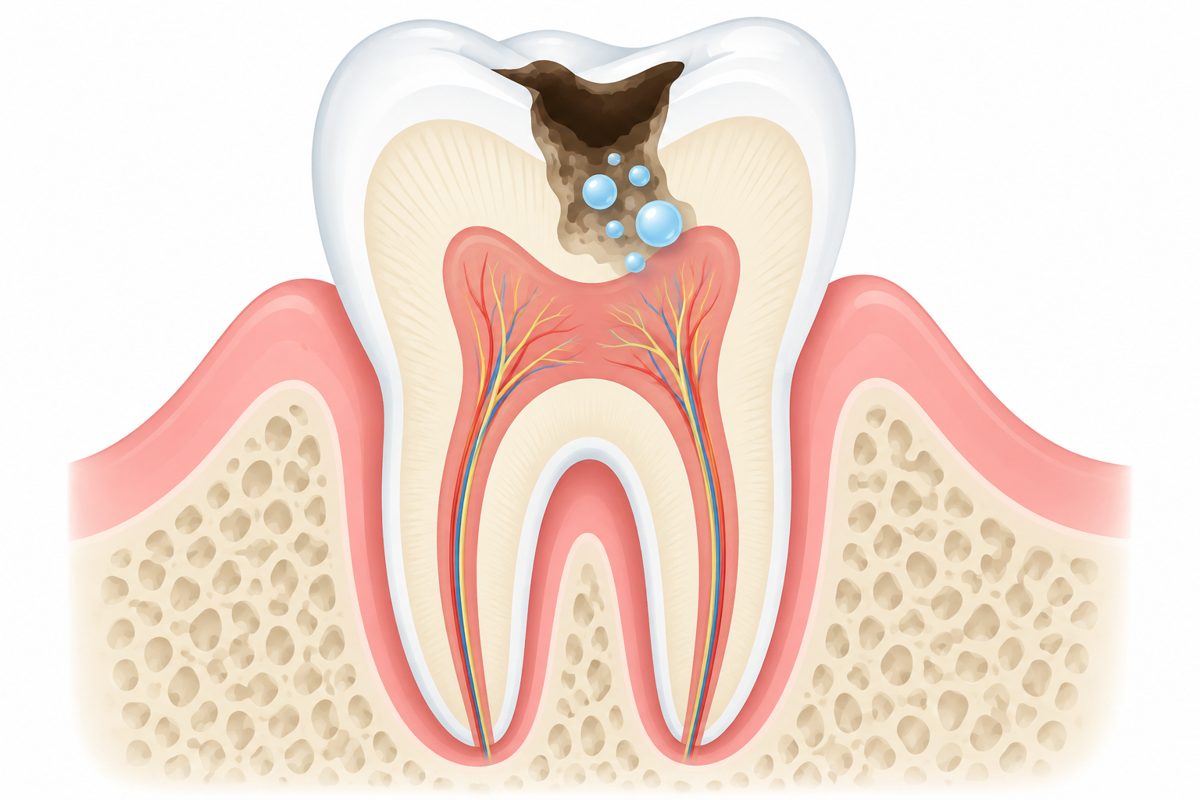
When decay reaches close to the nerve, removing all of it can expose the nerve and lead to a root canal. With an ozone approach, the dentist removes decay more conservatively, treats what remains with ozone to disinfect it, and then restores the tooth.
A 2021 randomized crossover study in Scientific Reports (Al-Omiri et al.) compared this with traditional complete caries removal in symptomatic, deep lesions. The ozone method was associated with less pain 24 hours after treatment and less need for root canal treatment after 2 years of follow-up.
Gum (Periodontal) Disease
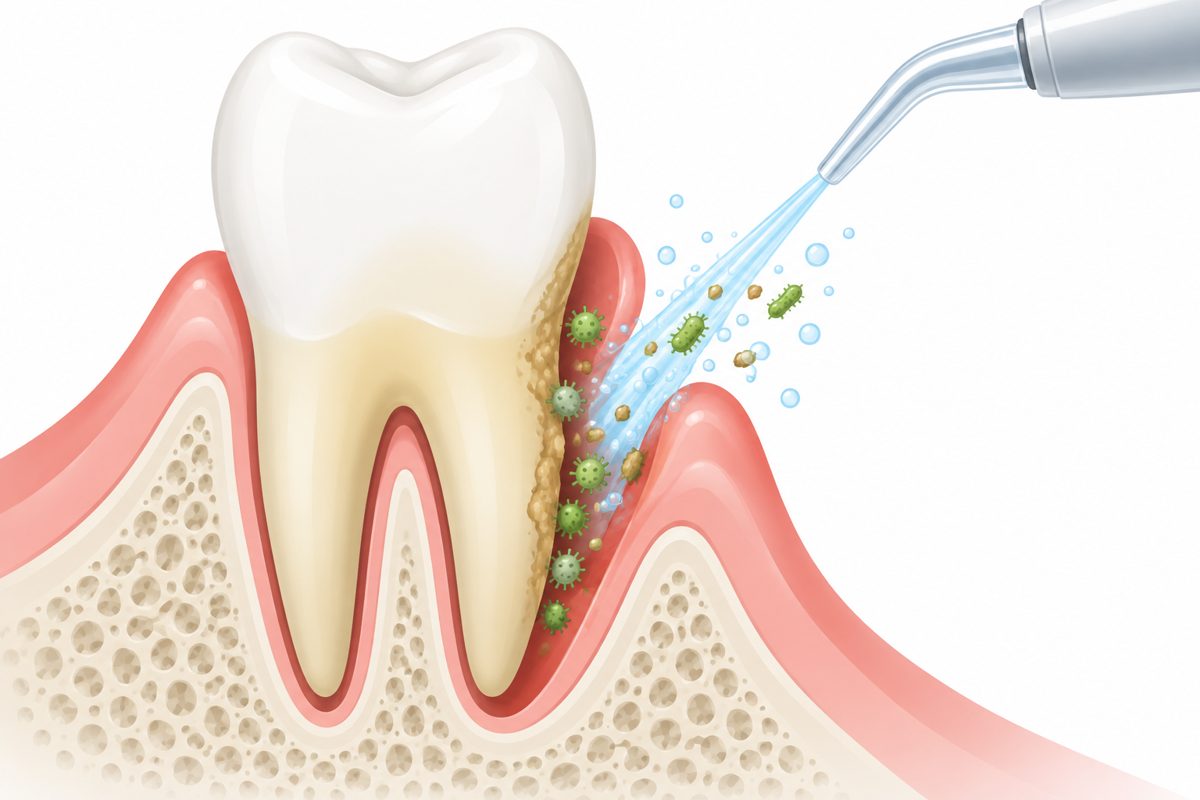
Ozonated water and ozone gas are used to clean deep gum pockets, reduce harmful bacteria, and calm inflamed tissue. They're used alongside, not instead of, thorough professional cleaning. Custom trays can treat the whole mouth at once.
A 2020 randomized clinical trial (Moreo et al.) found a marked decrease in bacteria, both for specific species and total count, in the quadrants treated with ozonated water compared with the other side of the mouth. Reviews published in 2012 and 2013 describe ozone as well suited to all stages of gum disease.
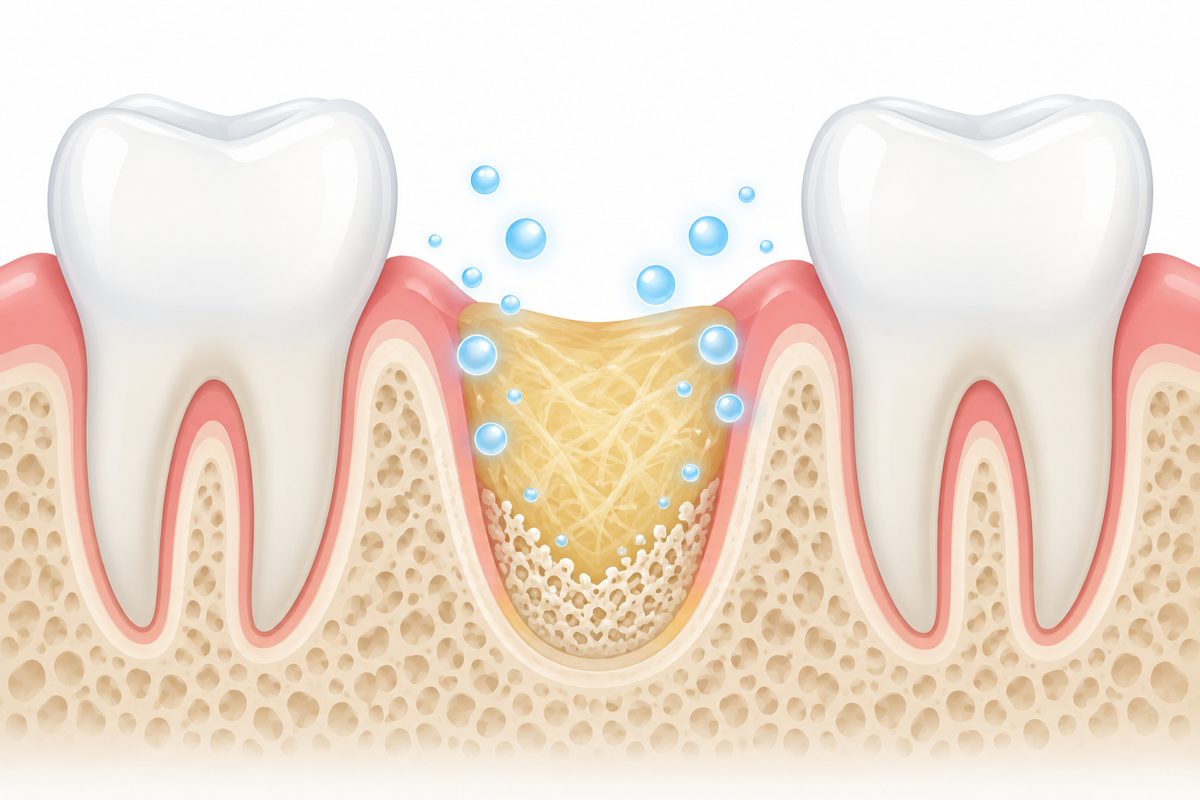
Tooth Extractions & Oral Surgery
After an extraction, the socket can be rinsed with ozonated water and treated with ozone gas, often together with PRF (platelet-rich fibrin), a healing material made from the patient's own blood. The lecture lists these benefits seen with combined PRF and ozone:
- Faster bone healing
- Less pain after tooth extraction
- Less swelling during healing
- Lower chance of dry socket and bone infection
- Better early blood supply to the socket
These benefits come from the presenter's clinical experience. The lecture doesn't cite a specific study for them.
Failing Implants & Jaw Bone Infections
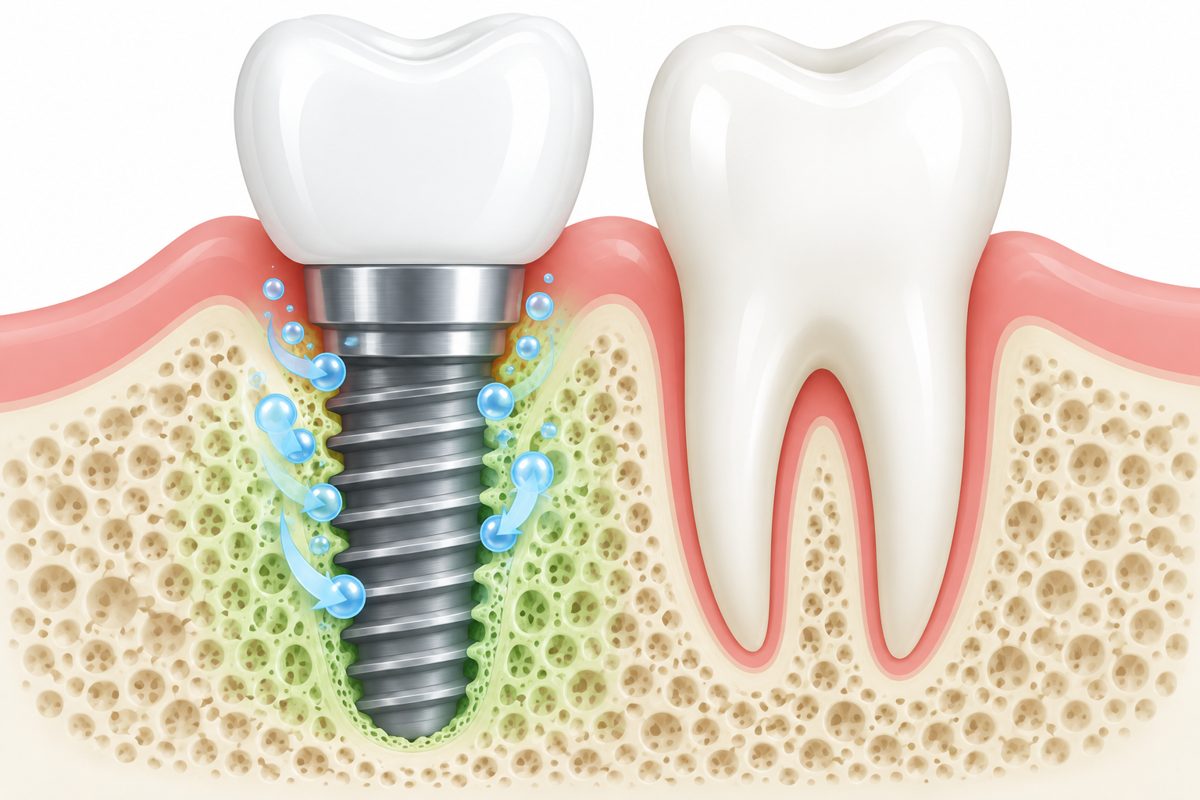
Infection around a dental implant (peri-implantitis) can destroy the bone that holds the implant. Ozone gas and ozonated water can be used to disinfect the implant surface and surrounding bone, aiming to save the implant rather than remove it.
Ozone has also been used for difficult jaw-bone conditions such as bisphosphonate-related osteonecrosis of the jaw (BRONJ).
How We Use Ozone at Scottsdale Family Smiles
Dr. Kamran Fattah, DMD, uses ozone throughout everyday care, not only for special cases. Here is where you may see it during your visits.
Fillings
Ozone disinfects the tooth after decay is removed and before the filling is placed.
Oral Surgery
Extraction sites and surgical areas are cleaned with ozone gas and ozonated water, often with PRF from your own blood.
Ozone Injections
Small, measured amounts of ozone placed into gum or bone to help reduce inflammation and infection.
Hygiene & Periodontal Visits
Ozone gas and ozonated water used during cleanings and gum treatments to lower bacteria in the pockets.
Cavitation Treatment
Ozone is part of our protocol for cleaning jawbone cavitations and old extraction sites.
Apical Lesions
Ozone is used in treating infection or inflammation at the tip of a tooth's root (an apical lesion).
Nasal & Ear Insufflation
Ozone gas gently introduced into the nose or ear. Ask us whether it fits your care plan.
What the Research Says
These are the publications cited in the lecture, labeled by type so you can see how strong each kind of evidence is.
| Publication | Type | What it reports |
|---|---|---|
| Al-Omiri MK et al. "Treatment of symptomatic, deep, almost cariously exposed lesions using ozone." Sci Rep. 2021;11(1):11166. | Randomized crossover study | Less pain at 24 hours (p < .0001) and less need for root canal treatment at 2 years (p = .014) with ozone after partial caries removal vs. complete caries removal. |
| Moreo G, Mucchi D, Carinci F. "Efficacy ozone therapy in reducing oral infection of periodontal disease: a randomized clinical trial." J Biol Regul Homeost Agents. 2020;34(4 Suppl 1):31-36. | Randomized clinical trial | Marked decrease in bacteria (specific species and total count) in the left quadrants, treated with ozonated water, compared with the right. |
| Suh Y et al. "Clinical utility of ozone therapy in dental and oral medicine." Med Gas Res. 2019;9(3):163-167. | Review | Summarizes uses including caries, gum disease, osteonecrosis of the jaw, root canals, sensitivity, and post-surgical pain. |
| Srikanth A et al. "Application of ozone in the treatment of periodontal disease." J Pharm Bioallied Sci. 2013;5(Suppl 1):S89-S94. | Review | Describes ozone's antimicrobial, circulatory, and immune-modulating effects in oral infections. |
| Gupta G, Mansi B. "Ozone therapy in periodontics." J Med Life. 2012;5(1):59-67. | Review | Describes ozone (gas, water, oil) as well indicated in all stages of gingival and periodontal disease. |
| Cole G. "Treatment of Bisphosphonate Related Osteonecrosis of the Jaw (BRONJ) with Oxygen-Ozone Therapy: A Case Report." J Implant Adv Clin Dent. 2013. | Case report | A single patient's BRONJ treated with oxygen-ozone therapy. |
Reviews summarize other studies, and case reports describe individual patients. Only the randomized studies directly compare ozone with another treatment.
Is Ozone Therapy Safe?
In dentistry, ozone is applied directly to a tooth, gum pocket, or socket, and it breaks back down into oxygen. Ozone gas is harmful to breathe, so it's delivered in sealed systems or with strong suction, and never inhaled.
The lecture cites a complication rate of 0.7 per 100,000 treatments. That figure comes from a 2019 review of medical ozone therapy (Rowen & Robins, Curr Pain Headache Rep), not from dental studies specifically.
The U.S. FDA limits ozone produced by medical devices (21 CFR 801.415) and states that ozone is a toxic gas with no known useful medical application in specific, adjunctive, or preventive therapy. Dental ozone is used by many biological dentists, but it's important to know this regulatory position when deciding on care.
Who should not have ozone therapy
The lecture lists these contraindications. Please tell us about any of them:
- Blood clotting failure
- Bleeding disorders (thrombocytopenia)
- Taking ACE inhibitors
- Uncontrolled hyperthyroidism (Graves')
- Acute alcohol intoxication
- Hemorrhagic stroke
- G6PD deficiency (rare)
- Pregnancy
What Our Patients Say
“I love the fact that he always tries to find natural solutions to problems and is on the cusp of the best treatments.”
“Very natural approach to dentistry and very cutting edge at the same time.”
“I was happy to hear we are trying to save a tooth, instead of an extraction!”
★ 5.0 on Google from 440+ reviews · Read more patient reviews
Frequently Asked Questions
Does ozone therapy hurt?
Rinses, trays, and gas applied to a tooth or gum pocket are usually comfortable. If gum or bone needs to be treated more deeply, your dentist will talk with you about keeping you comfortable.
Does ozone replace cleanings, fillings, or root canals?
No. Ozone is used alongside standard care. It helps disinfect and supports healing, but decay still needs restoring and gum disease still needs thorough cleaning.
Can ozone save a tooth I've been told to extract?
Sometimes, but not always. It depends on how much bone and tooth structure remain. Your dentist can tell you whether it's worth trying in your situation.
How many treatments will I need?
It varies. Some uses take a single application, like disinfecting a cavity before a filling. Others, like treating a deep gum pocket or an implant infection, may take a series of weekly visits.
Is ozone therapy covered by insurance?
Coverage varies by plan. Please call our office and we'll help you understand your options.
Related Services
Ask Us About Ozone Therapy
Dr. Fattah looks at your whole-body health when planning your care. Schedule a visit to find out whether ozone could be part of your treatment.
This page is for patient education and is not medical advice. Results vary from patient to patient.