All-on-4 Implants in Scottsdale, AZ
Full-Arch Dental Implants
 Clinically reviewed by Dr. Kamran Fattah, DMD
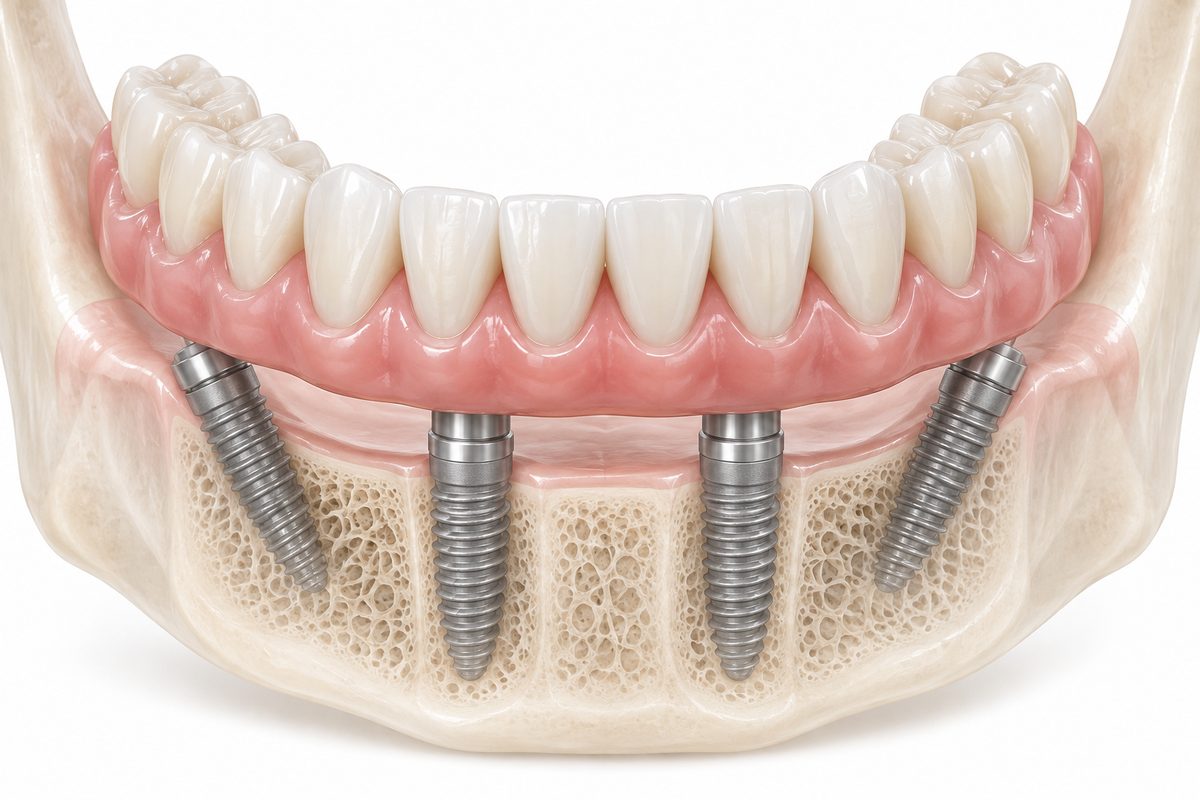
All-on-4 replaces a complete arch of upper or lower teeth with a fixed, natural-looking bridge on just four implants. It doesn't come out at night, there's no denture adhesive, and in many cases you leave with a full set of teeth on the day of surgery.
For patients in Scottsdale who are missing most of their teeth, have failing teeth, or are tired of dentures, Dr. Fattah offers full-arch implants planned in 3D and placed with care for your bone, gums, and overall health. Call (480) 607-6937 to schedule your consultation.
Book a Full-Arch ConsultationKey takeaways
- A full arch of fixed teeth on four implants, with the back two angled to make the most of your existing bone.
- Many patients receive a full set of temporary fixed teeth the same day, with the final bridge a few months later.
- Angled implants can often avoid the need for bone grafting, even after years of bone loss.
- Surgery typically takes about 2.5 hours per arch, and we can treat the upper, lower, or both at once.
- Unlike dentures, implants help preserve the jawbone and restore much of your natural chewing ability.
What Is All-on-4?
The All-on-4 concept uses four strategically placed implants to support a complete arch of 10 to 14 teeth. The two front implants are placed straight, and the two back implants are tilted. Tilting lets longer implants anchor in the denser bone toward the front of the jaw, avoiding the sinuses in the upper jaw and the nerve in the lower jaw.
The result is a stable foundation that, in many cases, avoids the bone grafting traditional implants would require after long-term tooth loss. Some patients benefit from five or six implants instead, and Dr. Fattah will recommend the number that's right for your bone and bite.
Why Patients Choose Full-Arch Implants
Teeth in a Day
When the implants are stable enough, fixed temporary teeth are attached the same day, so you never go without a smile.
Fixed, Not Removable
Your new teeth are secured to the implants. No slipping, clicking, adhesives, or taking them out at night.
Eat With Confidence
Bite into foods you may have avoided for years. Implants restore far more chewing power than dentures.
A Fuller, Younger Look
Implants support the lips and cheeks and help preserve the jawbone, reducing the sunken look of long-term tooth loss.
Speak Clearly
No bulky plate covering the roof of your mouth, so speech and taste feel natural again.
Often No Grafting
Angled implants make the most of the bone you have, which can mean fewer surgeries and a shorter timeline.
All-on-4 vs. Traditional Dentures
| All-on-4 fixed implant bridge | Snap-on implant overdenture | Traditional denture | |
|---|---|---|---|
| Stays in place | Fixed; only your dentist removes it | Clips onto implants; removed daily | Held by suction or adhesive |
| Palate covered (upper) | No | Often reduced | Yes |
| Chewing ability | Close to natural teeth | Good | Limited |
| Jawbone | Helps preserve bone | Helps preserve bone | Bone continues to shrink |
| Upfront cost | Highest | Moderate | Lowest |
Not ready for a full arch? Explore all of your options for replacing missing teeth, from single implants to partials.
Ceramic Full-Arch Implants
Prefer to avoid metal? Dr. Fattah offers ceramic implant options that mimic All-on-4: a full, fixed arch of teeth supported by metal-free ceramic implants instead of titanium.
We'll talk through ceramic and titanium at your consultation and recommend what fits your bone, your bite, and your health goals.
Gentle, Biologic Extractions
When teeth need to come out first, we follow our biologic extraction protocol: careful removal, thorough cleaning of each socket, ozone and laser disinfection, and platelet-rich fibrin (PRF) from your own blood to support healing, with bone grafting recommended where it helps.
Learn more about ceramic implants.
Is All-on-4 Right for You?
You may be a great candidate if you:
- Are missing most or all of your teeth in one or both jaws
- Have many failing, broken, or loose teeth from decay or gum disease
- Wear dentures and dislike how they fit, feel, or limit your eating
- Have been told you don't have enough bone for traditional implants
- Want a fixed result with as few surgeries as possible
Your Evaluation
Before recommending a full arch, we complete a thorough exam, review your medical history, and take a 3D CBCT scan to measure your bone and map nerves and sinuses. We'll plan carefully if you have uncontrolled diabetes, smoke, take bone medications, or grind heavily.
If any teeth can predictably be saved, we'll tell you. A full arch is a big decision, and we want it to be the right one.
From Consultation to Your New Smile
- Consultation and 3D planning. Exam, health history, CBCT scan, and photos. We design your new smile and the implant positions digitally, so we can plan precisely before surgery.
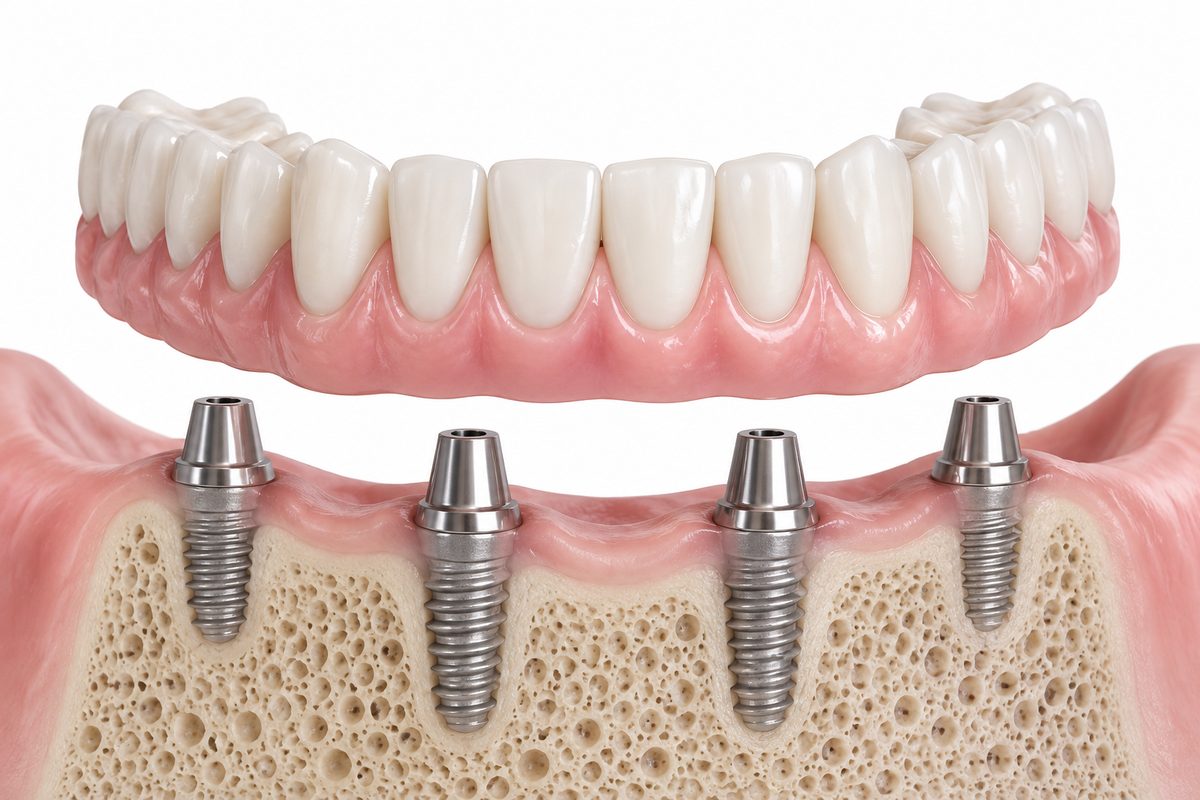
- Surgery day. After anesthesia, any remaining failing teeth are removed and the sites thoroughly cleaned and disinfected. Four implants are placed, which typically takes about 2.5 hours per arch. We can treat one or both arches.
- Teeth the same day. When the implants are stable, a fixed temporary bridge is attached, so you leave with a full smile.
- Healing. Over the next few months, the implants bond with the bone. You'll follow a soft-food diet early on, and we'll see you for checks.
- Your final bridge. Once healed, we take new records and deliver a stronger, custom final bridge, refined for appearance, bite, and comfort.
- Maintenance. Professional cleanings and periodic checkups keep your implants and gums healthy for the long term.
Does All-on-4 Work Long Term?
The All-on-4 concept has been used since the late 1990s and is well studied. A systematic review of All-on-4 studies reported high implant and bridge survival over short- to medium-term follow-up. Long-term data continue to accumulate, and dental implants in general show about 96% survival at 10 years in a large review.
The honest picture: the most common issues with full-arch bridges are wear or chipping of the teeth, and gum inflammation if cleaning is neglected. Both are manageable with good home care and regular maintenance visits.
Life With Your New Teeth
- First days: swelling and soreness peak around day two or three and are managed with medication and cold packs.
- First months: a soft diet protects the implants while they integrate. Avoid hard and crunchy foods on the temporary bridge.
- Daily care: brush twice a day and clean under the bridge with a water flosser or special floss.
- Night guard: recommended if you clench or grind, to protect your investment.
Risks and Considerations
- As with any surgery: swelling, bruising, bleeding, and infection
- An implant that fails to integrate may need to be replaced
- Peri-implantitis (gum infection around implants) if cleaning is neglected
- Bridge wear or chipping over time, which may need repair
- Rarely, nerve or sinus involvement, which careful 3D planning helps avoid
Benefits, Limitations and Alternatives
Potential benefits
- A fixed, full arch of teeth that does not come out at night
- Often avoids bone grafting by angling the back implants
- Fixed temporary teeth on the day of surgery in many cases
- Chewing close to natural teeth
Limitations and risks
- A major surgery, usually with sedation, and a recovery period
- Remaining teeth in the arch are removed
- The bridge needs professional maintenance and may need repair or replacement over time
- Risks include infection, implant failure, and wear or fracture of the bridge
Alternatives
- A snap-on implant overdenture on fewer implants
- Traditional full or partial dentures
- Saving some teeth and replacing others with individual implants or bridges
What Our Patients Say
“my mouth is full of challenging problems which cannot be ignored, including extractions, root canals and a major implant.. Yet I always feel the utmost confidence as Dr. Fattah confidently "tackles the teeth" with his calm and efficient skill and kindness”
“I needed some complex dentistry including a ceramic implant and porcelain crowns. Dr. Fattah managed my case so efficiently that it seemed almost effortless.”
“From general cleaning to reconstructive work, we've been very happy with his services.”
★ 5.0 on Google from 440+ reviews · Read more patient reviews
All-on-4 FAQ
Will I really leave with teeth the same day?
In most cases, yes. When the implants are stable enough at surgery, a fixed temporary bridge is attached the same day. If they aren't, we'll protect them while they heal, and you'll still leave with teeth. The final bridge is placed a few months later.
How long does the All-on-4 procedure take?
Surgery typically takes about 2.5 hours per arch. Dr. Fattah can treat the upper arch, the lower arch, or both at the same visit.
Is All-on-4 painful?
You're comfortably numb during surgery. Afterward, most patients have swelling and soreness for several days, managed with medication. Many say it was easier than they feared.
Can I get All-on-4 if I have bone loss?
Often, yes. Tilting the back implants lets them anchor in denser bone toward the front of the jaw, which frequently avoids bone grafting or sinus lifts.
Is there a metal-free alternative to All-on-4?
Yes. We offer ceramic implant options that mimic All-on-4, giving you a fixed full arch on metal-free ceramic implants. Dr. Fattah will tell you whether it suits your bone and bite after your 3D scan.
Do I need an implant for every tooth?
No. Four implants can support a full arch of 10 to 14 teeth. Some patients benefit from five or six for added support, depending on bone and bite.
How do I clean All-on-4 teeth?
Brush twice daily and clean under the bridge with a water flosser or special floss. Professional cleanings, when the bridge may be removed by our team, keep the implants healthy.
How much does All-on-4 cost?
The cost depends on whether you're treating one or both arches, the number of implants, extractions, and the final bridge material. We'll give you a clear written estimate after your consultation and 3D scan.
Related Services
Related Reading
Get Your Smile Back in a Day
Schedule a full-arch consultation with Dr. Fattah. We'll take a 3D scan, show you what's possible, and give you a clear plan and estimate.
This page is for patient education and is not medical advice. Diagnosis and treatment decisions should be made with your dentist and physician based on your individual exam and health history.