Wisdom Teeth
A Conservative, Biologic Approach in Scottsdale, AZ
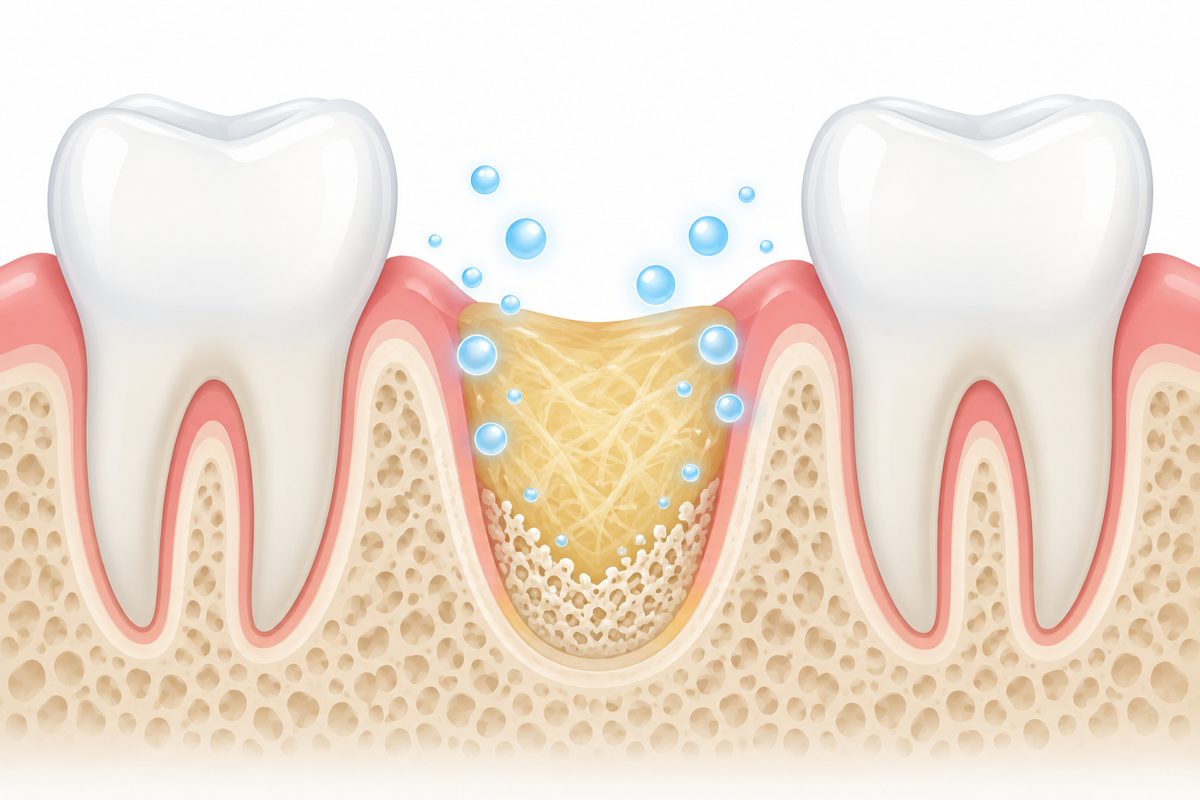
Many people are told their wisdom teeth "have to come out," even when they cause no problems. Our philosophy is different: if a wisdom tooth is healthy and isn't causing a problem, we generally recommend keeping it and monitoring it. Every extraction leaves a socket the body has to heal, and that healing doesn't always go perfectly.
When a wisdom tooth does need to come out, Dr. Fattah uses a biologic extraction technique with platelet-rich fibrin (PRF) from your own blood, medical ozone, and laser disinfection to help the site heal into healthy bone. Call (480) 607-6937 to schedule an evaluation.
Request a Wisdom Teeth Evaluation- Our philosophy
- When removal makes sense
- Why we weigh it carefully
- Our biologic technique
- If you keep them
- FAQ
Key takeaways
- Healthy, symptom-free wisdom teeth usually don't need to be removed. Research doesn't support taking them out "just in case."
- Removal makes sense for specific problems like repeated gum infections, decay, cysts, or damage to the neighboring molar.
- Any extraction can leave a poorly healed area in the bone, called covered socket residuum (CSR), and sometimes a cavitation. Researchers have linked these to inflammation elsewhere in the body.
- When removal is needed, we use PRF, ozone, and laser to clean the socket and support healing.
- Kept wisdom teeth should be checked regularly, like any other tooth.
Keep Healthy Wisdom Teeth
Wisdom teeth are your third molars, usually arriving between the late teens and mid-twenties. Some come in fully and work like any other tooth. Others stay partly or fully in the bone (impacted) and never cause trouble.
For years, removing them before problems started was routine. The research doesn't back that up. A Cochrane review found no good evidence that removing symptom-free, disease-free impacted wisdom teeth prevents future problems, and the UK's National Institute for Health and Care Excellence (NICE) advises against routine preventive removal.
So we take it tooth by tooth: we remove a wisdom tooth when there's a clear reason, not because of age alone.
Reasons a Wisdom Tooth Should Come Out
Repeated gum infections
Painful swelling of the gum over a partly erupted tooth (pericoronitis) that keeps coming back.
Decay that can't be fixed
A cavity in the wisdom tooth that can't be restored, or a tooth that can't be kept clean.
Damage to the next tooth
Decay, bone loss, or root damage on the second molar caused by the wisdom tooth pressing against it.
Infection or abscess
An infected nerve or abscess that can't be treated any other way.
Cysts or other disease
A cyst or other growth around the tooth, seen on a scan. These are uncommon, which is why we monitor.
Treatment planning
Occasionally a wisdom tooth gets in the way of other needed treatment, such as orthodontics or jaw surgery.
What an Extraction Can Leave Behind
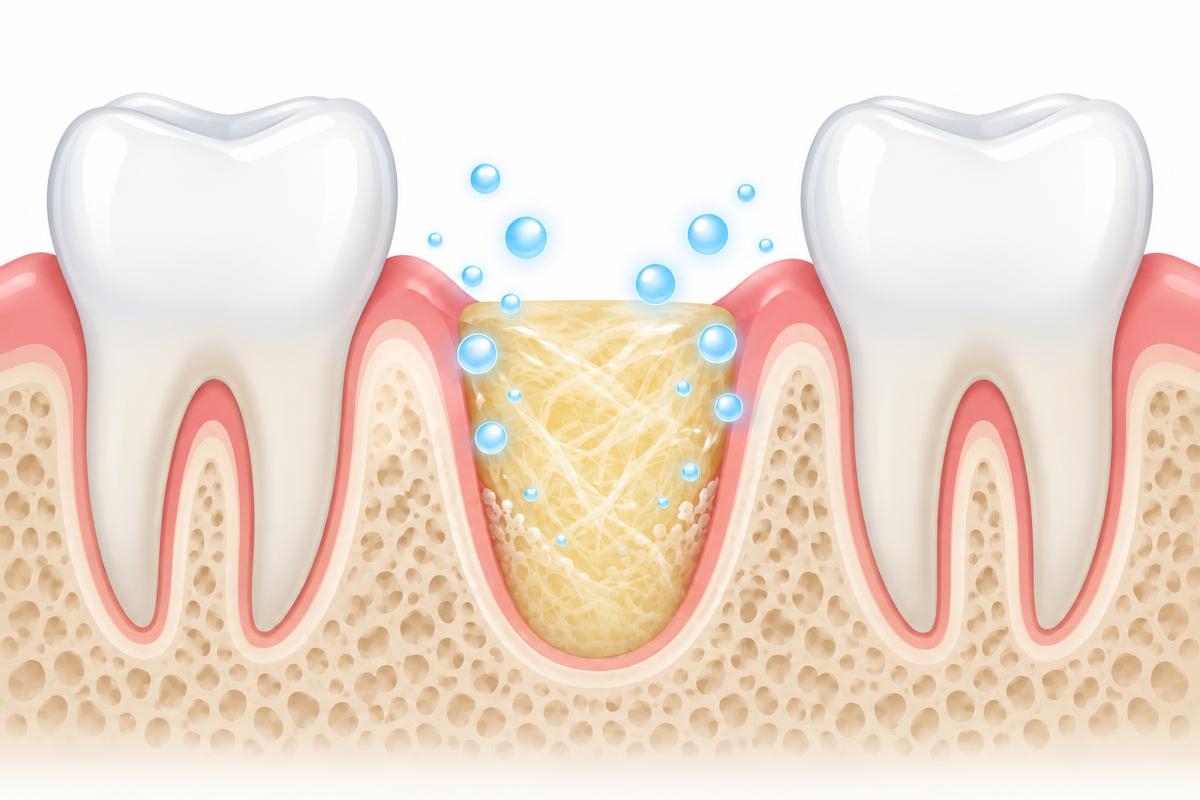
After a tooth is removed, the socket is supposed to fill with bone from the bottom up. Sometimes the top closes over first and the inside never fully fills in. A 2026 review by Ghanaati, Lechner, Bouquot and colleagues named this covered socket residuum (CSR): a hollow or under-mineralized area inside a healed socket that shows up on a 3D scan.
Many CSR areas are simply incomplete healing. In some people, though, poorly healed sockets develop into jawbone cavitations (also called FDOJ or NICO), and wisdom tooth sites are the most common place they're found. Studies have found high levels of the inflammatory messenger RANTES/CCL5 in this tissue, and researchers have linked cavitations to chronic inflammation elsewhere in the body. These links are still being studied, but they're one more reason not to remove a healthy tooth without a clear reason.
Other extraction risks
- Dry socket, when the blood clot is lost too early
- Numbness of the lip, chin, or tongue from a nearby nerve, usually temporary and rarely lasting
- For upper teeth, an opening into the sinus
- Swelling, pain, and time off work or school
Complication rates tend to rise with age. So if a wisdom tooth is clearly headed for problems, removing it sooner can be easier. We'll talk through that with you.
Our Biologic Extraction Technique
When a wisdom tooth needs to come out, we use the same careful approach we use to prevent cavitations. The goal is a clean socket that heals into healthy, living bone.
- 3D planning. A CBCT scan shows the roots, nearby nerves, and sinus so the procedure is as gentle and precise as possible.
- Gentle removal. We protect the surrounding bone, sectioning the tooth when needed instead of forcing it out.
- Thorough cleaning. Piezoelectric ultrasonic instruments remove the leftover ligament and any infected tissue, which can otherwise get in the way of bone healing.
- Ozone and laser disinfection. We disinfect the socket with medical ozone and SWEEPS laser irrigation with the Fotona LightWalker.
- PRF from your own blood. We fill the socket with platelet-rich fibrin, often mixed with a bone graft, so your own growth factors support healing. A PRF membrane covers the site.
Living With Your Wisdom Teeth
Keep them clean
Use a small-headed or single-tuft brush to reach behind the last molar, and floss there daily.
Check them regularly
We check them at your checkups and take images when needed to catch changes early.
Tell us about changes
Swelling, a bad taste, pain when biting, or jaw stiffness near the back teeth are reasons to call.
What Our Patients Say
“Dr. Fattah treated me through wisdom teeth removal and Invisalign (in addition to regular cleaning visits) over the last two years and I couldn’t be happier with my results.”
“I needed a deep cleaning and 3 teeth removed. I bravely did the procedure fully awake with numbing. Dr. Fattah was reassuring and gentle. I hardly felt a thing!”
“advice and follow-through on the one-offs (broken implant and extraction, in my case).”
★ 5.0 on Google from 440+ reviews · Read more patient reviews
Wisdom Teeth Questions
Do wisdom teeth need to be removed?
Not always. If a wisdom tooth is healthy, can be kept clean, and isn't causing problems, we generally recommend keeping it and monitoring it. Research doesn't support routine preventive removal.
Will my wisdom teeth crowd my front teeth?
This is a common belief, but research doesn't show that wisdom teeth are a main cause of front-tooth crowding. Removing them to prevent crowding isn't well supported.
I'm under 25. Should I have them out now?
Not just because of your age. We look at whether each tooth is healthy and has room. If one is clearly headed for trouble, earlier removal can be easier, and we'll explain why.
What is covered socket residuum (CSR)?
A hollow or under-mineralized area inside a healed extraction socket, seen on a 3D scan. It's often incomplete healing, but poorly healed sockets can develop into jawbone cavitations, which is why we take extra care with every extraction.
What makes your extraction technique different?
We plan with a 3D scan, remove the tooth gently, clean out the ligament with ultrasonic instruments, disinfect with ozone and laser, and fill the socket with PRF from your own blood to support healthy bone healing.
What is PRF?
Platelet-rich fibrin is made from a small sample of your own blood, spun to concentrate the platelets and growth factors your body uses to heal. Nothing is added to it.
I had my wisdom teeth out years ago. Should I worry?
Most old extraction sites heal well. If you have unexplained jaw or facial pain, or want them checked, we can evaluate the sites with a 3D scan. See Jawbone Cavitations.
What is recovery like?
Most patients have a few days of swelling and soreness. We'll give you detailed instructions and see you for a follow-up visit.
Related Services
Not Sure About Your Wisdom Teeth?
Get an honest, conservative opinion. We'll take a 3D scan, explain what we see, and only recommend removal when there's a real reason.
This page is for patient education and is not medical advice. Diagnosis and treatment decisions should be made with your dentist and physician based on your individual exam and health history.