Laser Soft Palate Snoring Therapy in Scottsdale, AZ
Non-Invasive Treatment for Snoring & Sleep Apnea
 Clinically reviewed by Dr. Kamran Fattah, DMD
If your snoring keeps your partner awake or sends someone to the guest room, you're not alone. When the soft palate is part of the cause, a gentle laser treatment may help.
Laser soft palate snore reduction therapy is an innovative treatment approach designed to alleviate snoring associated with soft palate issues. This non-invasive procedure uses laser technology to address underlying causes of snoring and improve airflow during sleep.
Call our office at (480) 607-6937 to learn more about how laser therapy can help you (and others in your household) achieve more restful sleep.
Request Appointment- Causes & risk factors
- How it works
- DEKA QuietNite
- Fotona NightLase
- Enlarged tonsils
- Patient results
- Laser & sleep apnea
- Risks of untreated apnea
- FAQ
Key takeaways
- The laser tightens the soft palate and stimulates new collagen, reducing the tissue vibration that causes snoring.
- We offer two lasers: DEKA QuietNite takes under ten minutes, and Fotona NightLase sessions take 45 to 60 minutes. Both involve no cutting or bleeding and little to no downtime.
- The laser can also shrink enlarged tonsils by disinfecting the tonsil tissue and its crypts.
- Many patients notice easier breathing right away; snoring results can show in as little as five days.
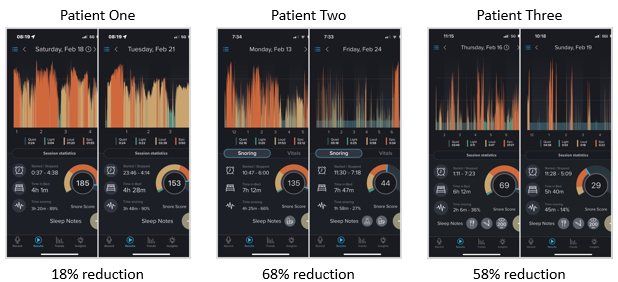
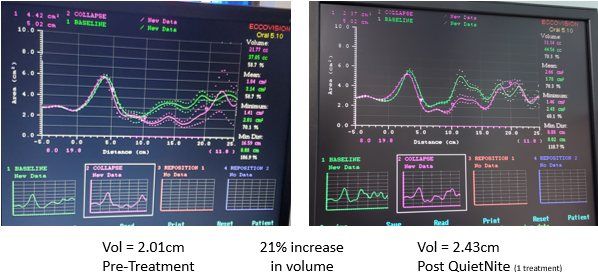
- Our patients' SnoreLab scores dropped 58–68% within a week, and throat airway volume rose 21% after one treatment.
- For sleep apnea, laser therapy is one part of a broader plan, not a stand-alone cure.
Causes & Risk Factors of Obstructive Sleep Apnea (OSA)
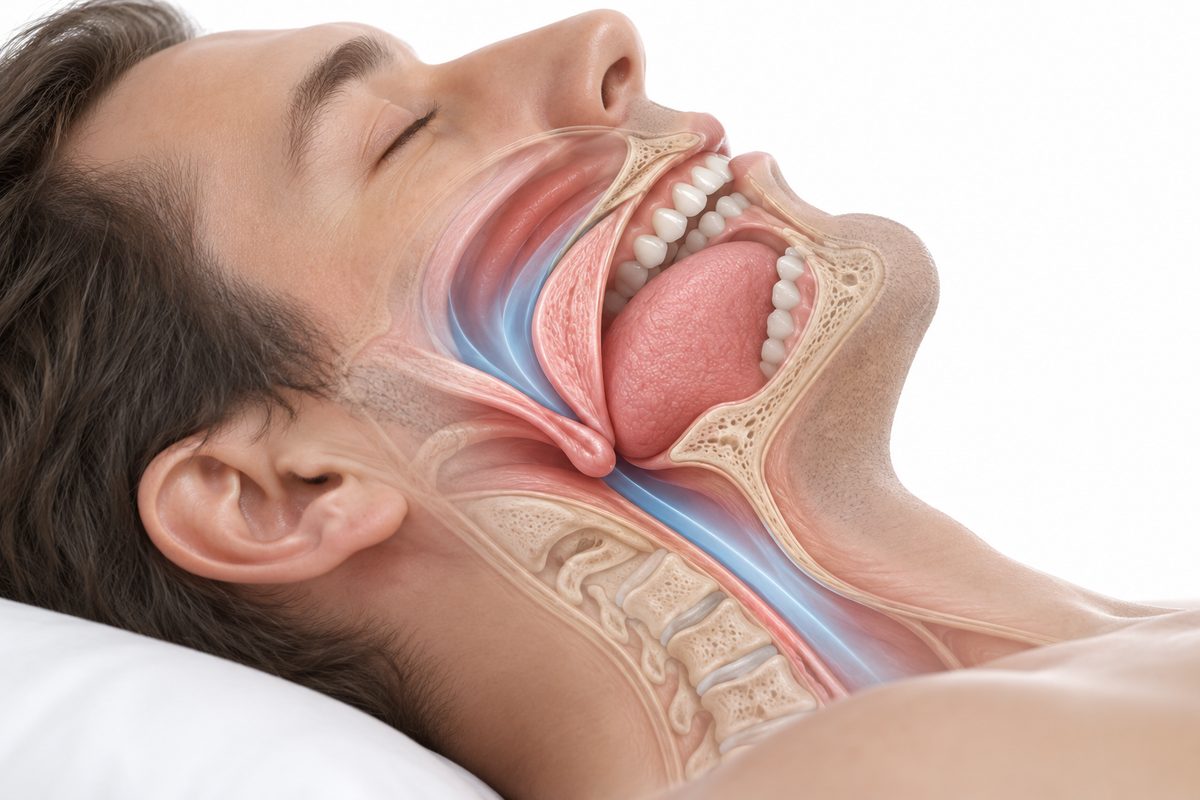
Snoring is often a symptom of sleep apnea, a sleep disorder characterized by interruptions in breathing during sleep. Obstructive sleep apnea (OSA) occurs when the soft palate, a collection of soft tissues at the back of the throat, collapses and blocks the airway, leading to brief pauses in breathing.
OSA can be caused by an enlarged tongue, throat muscles that are too relaxed, abnormally narrow airways, and pressure on the throat from excess weight. While the primary goal of sleep apnea treatment is to stop the temporary lapses in breathing, a secondary goal is to stop snoring and disruptive breathing sounds.
How Laser Therapy Reduces Snoring & Improves Sleep
Scottsdale Family Smiles provides laser soft palate snore reduction therapy to specifically treat snoring caused by soft palate vibrations. Here's how it works:
Precision Reshaping
The laser targets, reshapes, and tightens the soft palate tissues to reduce the excess tissue that contributes to snoring.
Enhanced Collagen Production
Laser therapy stimulates the production of collagen, which helps promote tissue firmness and elasticity in the soft palate.
Minimally Invasive
This non-surgical procedure is minimally invasive, is performed right in our office, and requires little to no recovery time.
Fast Results
Many patients notice easier breathing right after treatment, with continued benefits over time as new collagen firms the tissue.
The laser works in a fractional pattern: it creates a grid of tiny heat points in the tissue. These tighten existing collagen fibers right away and signal the body to build new collagen. The tightening continues over the first several days, and by about day 7 new collagen is forming.
What Is Laser Palate Treatment?
DEKA QuietNite. This treatment uses CO2 laser energy to gently ablate palate tissue, prompting a rapid healing response that generates new collagen to tighten the soft palate to reduce snoring and help shrink enlarged tonsils.
The procedure is non-invasive and takes under ten minutes, with no bleeding and little to no downtime before returning to normal activities. Patients can see great results in as little as five days after treatment.
Fotona NightLase Laser Therapy
Along with QuietNite, we offer Fotona NightLase, a laser snoring treatment backed by a large body of published research. It uses an Er:YAG laser in a gentle, non-ablative mode: the laser warms the tissue without removing it. The heat tightens existing collagen and prompts the body to build new collagen, so the tissues at the back of the throat become firmer and vibrate less during sleep.
We treat the soft palate, uvula, tonsil area, and back of the tongue. There's no cutting, no bleeding, and usually no need for anesthetic, and most people go back to normal activities the same day.
- Visit length: each NightLase session takes about 45 to 60 minutes.
- Treatment schedule: the same as QuietNite: 3 to 4 sessions about 21 days apart in the first year, then 1 session every 6 to 12 months as needed, based on your sleep and snoring.
- Research: a randomized controlled trial found that NightLase significantly reduced snoring compared with a sham (placebo) treatment, with no complications, and a systematic review and meta-analysis found it effective for snoring.
QuietNite or NightLase?
- DEKA QuietNite: CO2 laser, under ten minutes, gently removes a very thin layer of palate tissue to trigger tightening
- Fotona NightLase: Er:YAG laser, about 45 to 60 minutes, warms the tissue without removing it
- Both: 3 to 4 sessions about 21 days apart in the first year, then 1 session every 6 to 12 months as needed
- Dr. Fattah will recommend one or both based on your exam, airway measurements, and sleep testing
Laser Treatment for Enlarged Tonsils
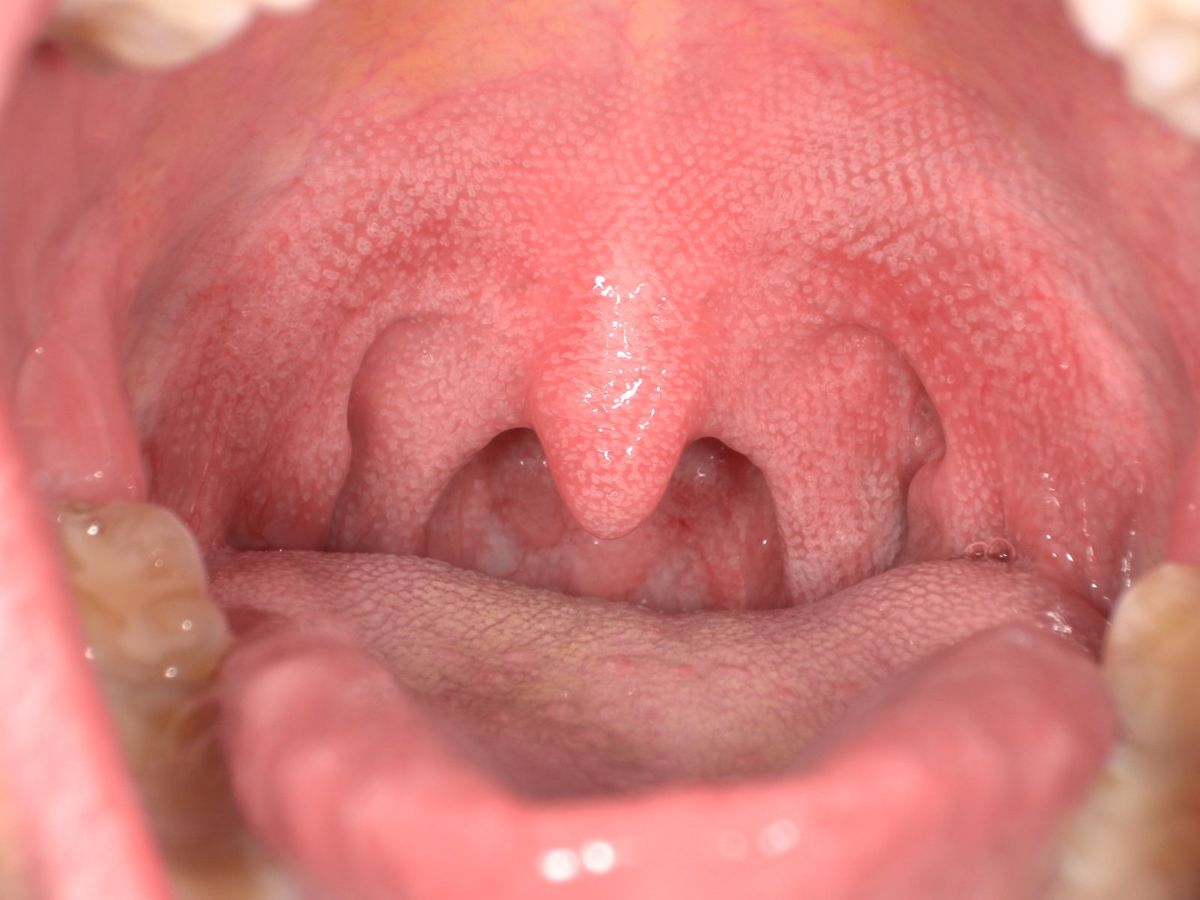
Large tonsils can narrow the back of the throat and add to snoring and mouth breathing. In many cases, the laser can shrink enlarged tonsils without removing them. We usually treat tonsils with the DEKA CO2 laser.
It works by disinfecting the tonsil tissue and its crypts, the small pockets on the tonsil surface where bacteria and debris collect. As the tissue calms and heals, the tonsils can get smaller and the airway opens up.
Good to know
- Usually done with the DEKA CO2 laser
- Done in our office, with no cutting
- Can be done in the same visit as soft palate treatment
- Results vary, and some people need more than one session
- Very large tonsils or repeated tonsil infections may still need an ENT evaluation
Less Snoring, Easier Breathing: What Our Patients See
Most patients notice easier breathing and a richer voice right away. These results are from Dr. Fattah's patients and lectures.
Snore reduction
Patients tracked their snoring at home with the SnoreLab app before and after DEKA QuietNite treatment. Scores fell 58%, 68%, and 58% within 2 to 7 days.
Breathing improvement
We measure the airway with a pharyngometer, which maps the size of the throat. After a single DEKA QuietNite treatment, one patient's throat volume rose from 2.01 to 2.43 cc, a 21% increase.
Better airflow after a second QuietNite treatment
- Patient 1: readings rose from 132.7 before treatment to 338.3, then 380.4 after the second treatment. That's about three times the airflow with one-third of the resistance.
- Patient 2: readings rose from 213.8 to 422.4, then 455.1. That's more than double the airflow with half the resistance.
Individual results vary. Treatment usually continues with 3 to 4 sessions about 21 days apart in the first year, then 1 session every 6 to 12 months as needed.
Laser Therapy & Sleep Apnea
Laser treatment is primarily for snoring. If you may have sleep apnea, we start with a sleep study, read by a board-certified sleep physician.
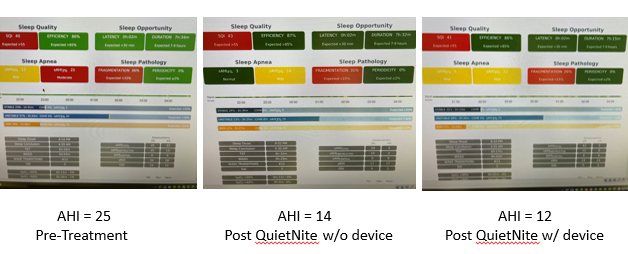
For apnea, laser therapy can be combined with an oral appliance or expansion therapy. Ongoing studies from DEKA, the maker of QuietNite, show a 30–50% drop in AHI when QuietNite is done before oral appliance therapy. These are early, unpublished findings and haven't been peer reviewed yet.
Health Risks & Complications of Untreated Sleep Apnea
Leaving sleep apnea untreated causes more than loud snoring and poor sleep quality. It can increase your risk of:
Cardiovascular Issues
Sleep apnea is associated with a higher risk of high blood pressure, heart disease, and stroke.
Metabolic Disorders
Sleep apnea has been linked to insulin resistance and type 2 diabetes.
Daytime Fatigue
Frequent interruptions in sleep can result in excessive daytime sleepiness, affecting concentration and overall quality of life.
Accidents
Daytime drowsiness increases the risk of accidents at home, at work, and when driving.
Mental Health Challenges
Sleep apnea can also contribute to mood disorders, including depression and anxiety.
Reduced Quality of Life
The cumulative impact of untreated sleep apnea on your physical and mental well-being significantly reduces overall quality of life.
Benefits, Limitations and Alternatives
Potential benefits
- No cutting or bleeding
- A short visit with little to no downtime
- Can be combined with an oral appliance
- Aimed at the soft palate tissue that vibrates when you snore
- Can also shrink enlarged tonsils
- NightLase is supported by a randomized controlled trial and a meta-analysis
Limitations and risks
- Mainly a treatment for snoring, not a stand-alone treatment for sleep apnea
- Usually 3 to 4 sessions the first year, then maintenance sessions every 6 to 12 months as needed
- Results vary
- A mild sore throat or dryness for a short time is possible
- Testing comes first when sleep apnea is suspected
Alternatives
- A custom oral appliance
- Side sleeping, weight loss and less alcohol
- CPAP, when sleep apnea is diagnosed
- Evaluation by an ENT for nasal or throat surgery
What Our Patients Say
“I am going for airway improvement as I’ve had sleep apnea for 8 years … He gave me a few temporary options to improve sleep and then 4 different forms of treatment that would improve my sleep apnea potentially for the rest of my life.”
“I came to them for airway issues. … Dr Fattah is extremely knowledgeable on the subject of airway and even trains other doctors. There was no pressure, only facts.”
“I am so excited to have a better smile and possibly even sleep better.”
★ 5.0 on Google from 440+ reviews · Read more patient reviews
Laser Soft Palate FAQ
Does laser snoring treatment hurt?
Each laser pulse lasts about a millisecond, too short to be felt as pain, and there's no cutting or bleeding.
How quickly will I notice a difference?
Many patients notice easier breathing right away. Snoring results can show in as little as five days, and the tissue keeps firming as new collagen forms.
How many treatments will I need?
For both QuietNite and NightLase, we usually recommend 3 to 4 sessions about 21 days apart in the first year, then 1 session every 6 to 12 months as needed. We base follow-up sessions on your sleep and snoring, tracked with SnoreLab and airway measurements.
Will laser therapy cure my sleep apnea?
Laser therapy is mainly for snoring. For sleep apnea, it's one part of a plan guided by a board-certified sleep physician, often with an oral appliance, and follow-up testing measures your results.
Is there any downtime?
There is little to no downtime. Most people return to normal activities the same day.
Can the laser treat enlarged tonsils?
Often, yes. The laser disinfects the tonsil tissue and its crypts, the small pockets where bacteria and debris collect, which can help enlarged tonsils shrink. We usually use the DEKA CO2 laser for tonsils. Very large tonsils or repeated infections may still need an ENT evaluation.
What's the difference between QuietNite and NightLase?
DEKA QuietNite is a CO2 laser treatment that takes under ten minutes. Fotona NightLase is an Er:YAG laser treatment that warms the tissue without removing it. Each session takes about 45 to 60 minutes. NightLase is supported by a randomized controlled trial and a meta-analysis. Dr. Fattah will recommend the right option for you.
Related Services
See Great Results In As Little As Five Days
Schedule an appointment today with Dr. Fattah to learn more about how laser soft palate snore reduction therapy can help you and your family get a full night's sleep.
Patients travel to our Scottsdale office from Phoenix, Paradise Valley, and the East Valley.
This page is for patient education and is not medical advice. Diagnosis and treatment decisions should be made with your dentist and physician based on your individual exam and health history.