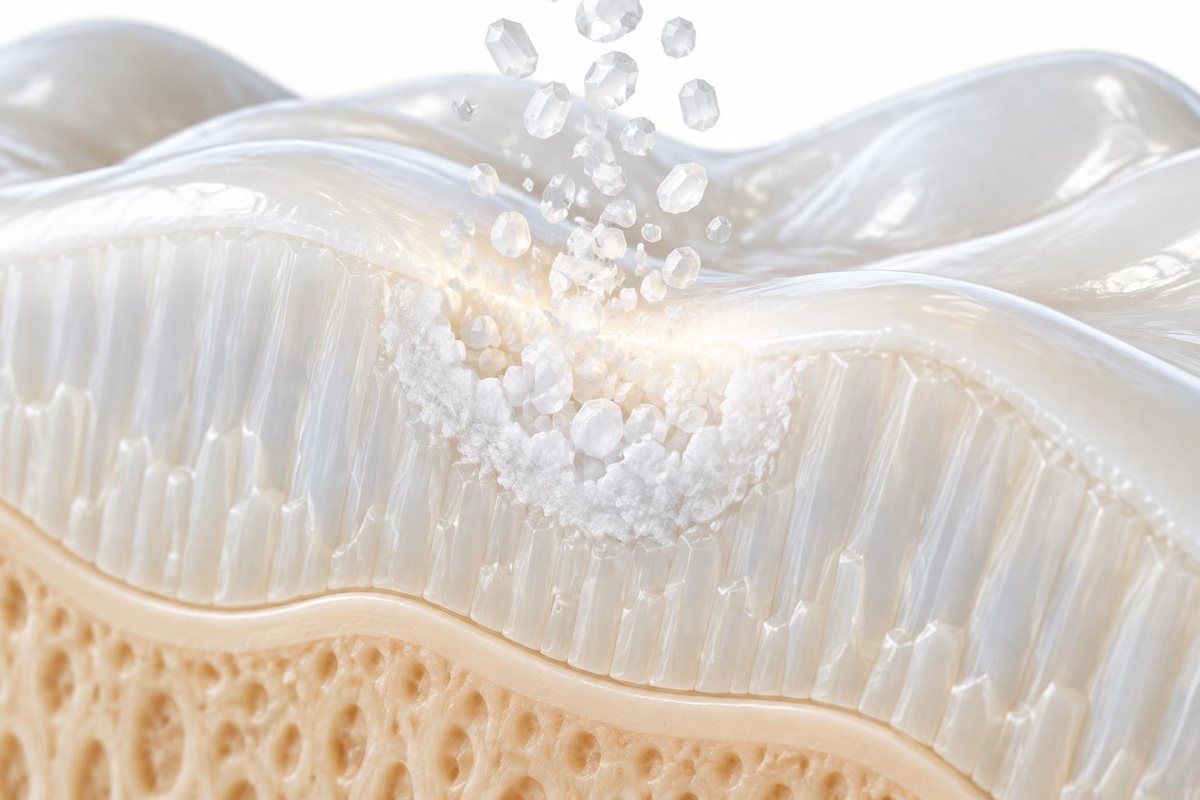
At Scottsdale Family Smiles, we are a fluoride-free office. Following the position of the International Academy of Oral Medicine and Toxicology (IAOMT), Dr. Fattah focuses on preventing and repairing early decay with tools such as hydroxyapatite, calcium-phosphate pastes, Curodont peptide therapy, iodine, ozone, and diet.
This page explains where fluoride comes from, what recent research says, and the alternatives we use, so you can make an informed choice for yourself and your family.
Request Appointment- Where fluoride comes from
- What recent research says
- The IAOMT position
- Our alternatives to fluoride
- FAQ
Key takeaways
- The CDC has said fluoride works mainly on the surface of the teeth, not by being swallowed.
- A 2024 Cochrane review found that, in today's studies, water fluoridation prevents about a quarter of one cavity per child's set of baby teeth, with low certainty.
- A 2024 U.S. National Toxicology Program review concluded, with moderate confidence, that fluoride levels above 1.5 mg/L are linked to lower IQ in children.
- Pregnant women, infants, and young children are the groups researchers are most concerned about.
- Decay can be prevented and early decay repaired without fluoride. We'll build a plan around your risk.
Source of fluoride you may be exposed to.
Fluoride occurs naturally in water, soil, and some foods, like tea. It's also added to many products: community water, toothpaste, mouthwash, dental varnishes and gels, some filling materials, prescription supplements, and drinks made with fluoridated water.
Each source is usually judged on its own, but people are exposed to all of them at once. The IAOMT argues that safety limits should account for total daily exposure, especially for small children, whose body weight is low.
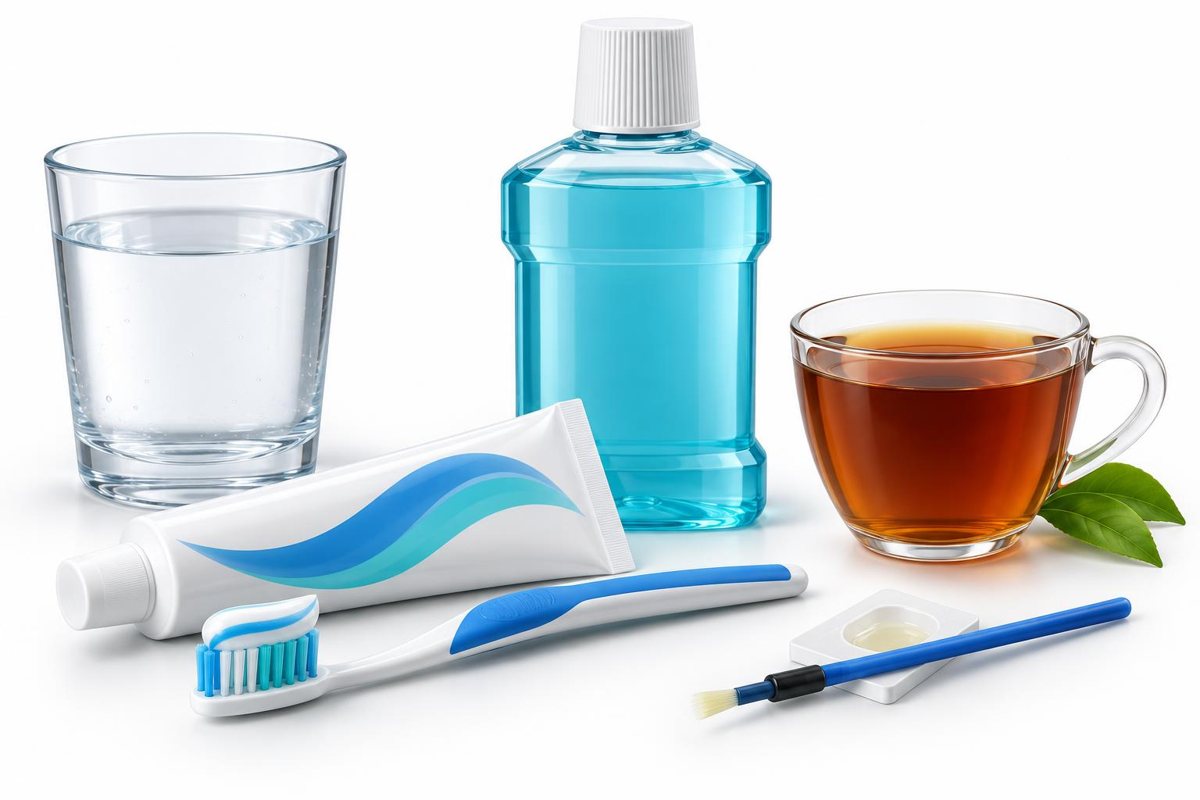
How Much Fluoride Is In It?
| Source | Typical fluoride level | Compared with fluoridated water |
|---|---|---|
| Scottsdale tap water (natural, none added) | 0.3–1.0 ppm | About the same |
| Fluoridated community water (U.S. target since 2015) | 0.7 ppm (mg/L) | 1× |
| Over-the-counter toothpaste | 1,000–1,500 ppm | About 1,400–2,100× |
| Prescription-strength toothpaste | 5,000 ppm | About 7,000× |
| In-office fluoride varnish (5% sodium fluoride) | 22,600 ppm | About 32,000× |
ppm = parts per million (1 ppm = 1 mg/L in water). Water and toothpaste levels are from the U.S. Public Health Service, the City of Scottsdale, and the American Dental Association. Toothpaste isn't meant to be swallowed, but young children often swallow some of it. Brushing raises fluoride in saliva 100 to 1,000 times, returning to normal within 1 to 2 hours (ADA).
What Recent Research Says
Fluoride was added to U.S. water starting in 1945, when tooth decay was common and fluoride toothpaste didn't exist yet. Since 2024, several major reviews have looked again at both the benefits and the risks.
National Toxicology Program, 2024
A federal review concluded, with moderate confidence, that fluoride exposures above 1.5 mg/L are associated with lower IQ in children. It found the data insufficient to say whether the U.S. level of 0.7 mg/L affects IQ.
JAMA Pediatrics, 2025
A meta-analysis of 74 studies by NIH scientists found that as fluoride exposure rose in pregnant women and young children, children's IQ scores fell. Most of the studies were done outside the U.S., in areas with higher fluoride levels.
JAMA Network Open, 2024
In a Los Angeles study (fluoridated water), higher fluoride levels in mothers during pregnancy were linked to nearly double the odds of neurobehavioral problems in their children at age 3.
Cochrane Review, 2024
Studies before 1975 showed a large benefit. In studies done since then, when fluoride toothpaste became common, water fluoridation prevented about 0.24 fewer decayed, missing, or filled baby teeth per child, with low certainty.
LOTUS Study, England, 2024
A 10-year study of 6.4 million dental patients found only a very small difference in decayed, missing, and filled teeth between fluoridated and non-fluoridated areas. The authors said the difference may not be meaningful.
CDC, 2001
The CDC stated that "fluoride's predominant effect is posteruptive and topical," meaning it works mainly on the tooth surface, not from being swallowed.
Dental Fluorosis: A Visible Sign of Overexposure
Too much fluoride while teeth are forming causes dental fluorosis, white streaks or spots and, in more severe cases, brown staining and pitting of the enamel. According to the CDC, about 41% of U.S. adolescents aged 12–15 and 23% of people aged 6–49 had some degree of fluorosis (1999–2004 data). Rates like these were one reason the U.S. lowered its recommended water level to 0.7 mg/L in 2015.
The Other Side
Major dental and public health organizations, including the ADA, still support community water fluoridation at 0.7 mg/L. A 2025 U.S. study in Science Advances found no cognitive harm from childhood exposure at recommended levels. Critics note it measured fluoride by community, not by person, and didn't cover pregnancy or infancy. Meanwhile, in 2025 Utah and Florida became the first states to ban adding fluoride to public drinking water.
The IAOMT Position on Fluoride
The IAOMT, a worldwide academy of dentists, physicians, and researchers, released its updated Position Paper against Fluoride Use in November 2024. It recommends against adding fluoride to community water and calls for reducing avoidable fluoride from dental materials and other products.
The IAOMT also says a single "optimal" dose can't fit everyone. Infants, children, people with diabetes or kidney disease, and people who drink a lot of water (such as athletes and outdoor workers) take in more fluoride for their size or clear it more slowly. It calls for patients to be told when dental products contain fluoride, so they can choose.
We share that view. Our goal is to keep your teeth healthy while respecting your choices about what goes into your body.
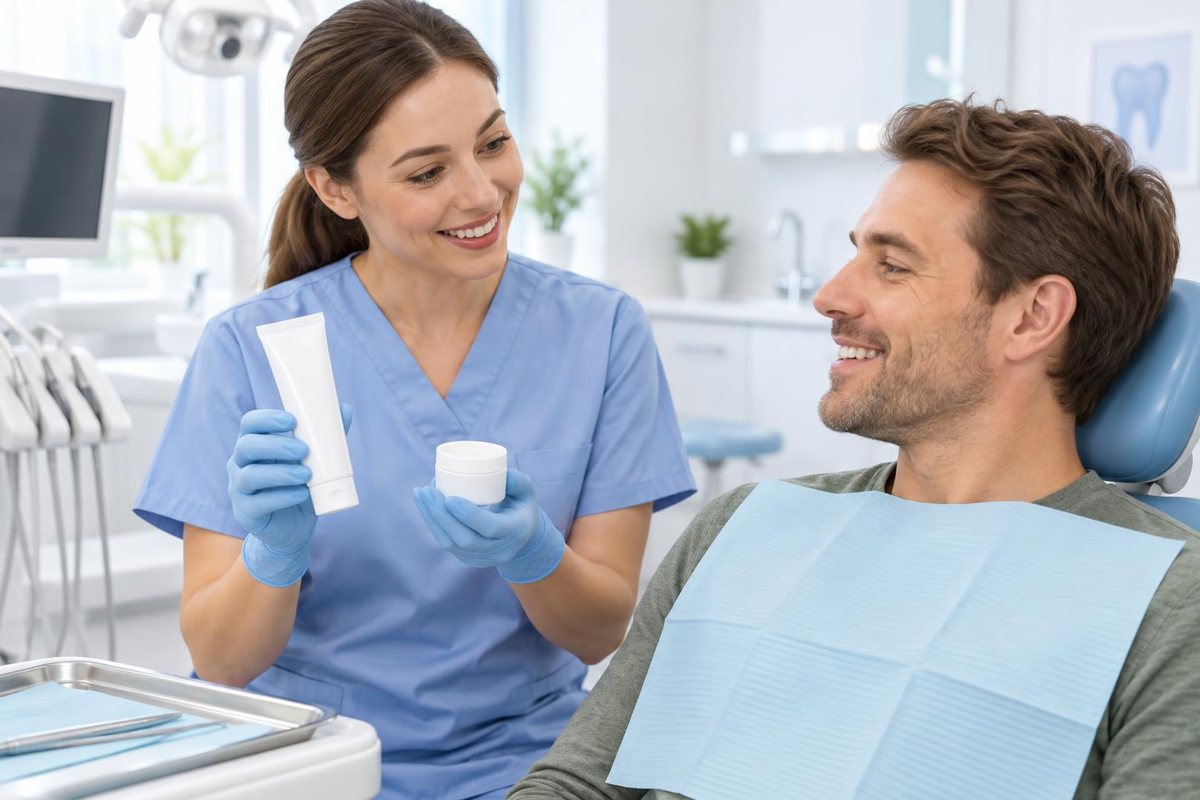
Our Alternatives to Fluoride
Tooth decay is caused by bacteria, mainly Streptococcus mutans, that feed on sugar and make acid that dissolves enamel. So the strongest prevention targets bacteria, acid, and diet, and helps teeth put minerals back in.
Early "white spot" decay can often be stopped or reversed before it needs a filling. We combine the tools below based on your decay risk.
| Option | How it works | What the evidence shows |
|---|---|---|
| Diet | Less sugar and fewer processed carbs; more vegetables, whole foods, and protein. | The IAOMT calls diet the most important way to prevent decay. Decay is a sugar-driven disease. |
| Hydroxyapatite (nano-HA) toothpaste | The same mineral enamel is made of. It fills tiny defects and helps remineralize. | Randomized trials in children (2021) and adults (2023) found it prevented decay as well as fluoride toothpaste. |
| Calcium-phosphate paste (MI Paste) | Delivers calcium and phosphate from a milk protein (CPP-ACP) to rebuild enamel and neutralize acid. | Systematic reviews show it remineralizes early white-spot lesions. We use the version without fluoride. |
| Curodont peptide therapy | A self-assembling peptide soaks into early decay and forms a scaffold that draws in calcium and phosphate, so enamel can repair from within. Also used for dentin repair. | Clinical studies show it can stop and regress early decay. |
| Iodine (povidone-iodine) | An antiseptic applied to the teeth to reduce decay-causing bacteria. | In a small study of toddlers, 91% treated every two months stayed cavity-free for a year, versus 54% without it. |
| Ozone | A powerful oxidizer that kills decay-causing bacteria within seconds. Used as gas, ozonated water, or ozonated glycerin rinse. | Strong lab evidence for killing bacteria. Clinical evidence for preventing decay is still emerging. Learn about ozone therapy. |
Why Families Choose a Fluoride-Free Office
“Our family chose this practice specifically because we want to avoid … routine fluoride applications that are standard in traditional offices. Here, even a simple cleaning is handled with biocompatible, non-toxic alternatives that respect our body's natural biology.”
“The practice's commitment to biological dentistry and using safe materials/products is also a huge upside!”
★ 5.0 on Google from 440+ reviews · Read more patient reviews
Frequently Asked Questions
Is Scottsdale's tap water fluoridated?
The City of Scottsdale does not add fluoride to its drinking water. Its sources contain low levels of naturally occurring fluoride, about 0.3 to 1.0 ppm. Many neighboring cities do add fluoride, so if you live elsewhere, check your city's annual water quality report. Reverse-osmosis filters remove most fluoride. Standard pitcher filters usually don't.
Is fluoride-free care right for my child?
Children are the group researchers are most concerned about, because their brains and teeth are still developing and they swallow more toothpaste. Children who are at high risk of decay still need strong prevention. We'll look at your child's diet, hygiene, and decay risk, and build a fluoride-free plan with you.
Will fluoride-free products protect my teeth as well?
For many people, yes. Hydroxyapatite toothpaste has matched fluoride toothpaste in randomized trials, and diet and good hygiene matter more than any paste. If you're at high risk of decay, we'll see you more often and add in-office treatments.
I'm pregnant. Should I avoid fluoride?
Several recent studies have focused on exposure during pregnancy. Talk with your physician. A hydroxyapatite toothpaste and a low-sugar diet are simple fluoride-free choices, and we're happy to coordinate with your doctor.
Do I need fluoride after a cleaning?
No. As a fluoride-free office, we use alternatives like remineralizing pastes and ozone after cleanings and for sensitive teeth.
Related Services
Looking for a Fluoride-Free Dentist?
If you live in the Scottsdale area and want to protect your family's teeth without fluoride, schedule a visit with Dr. Fattah. We'll assess your decay risk and build a prevention plan that fits your values.
This page is for patient education and is not medical advice. Please talk with your dentist and physician about the right prevention plan for you and your children.