Ceramic vs. Titanium Dental Implants in Scottsdale, AZ
 Clinically reviewed by Dr. Kamran Fattah, DMD
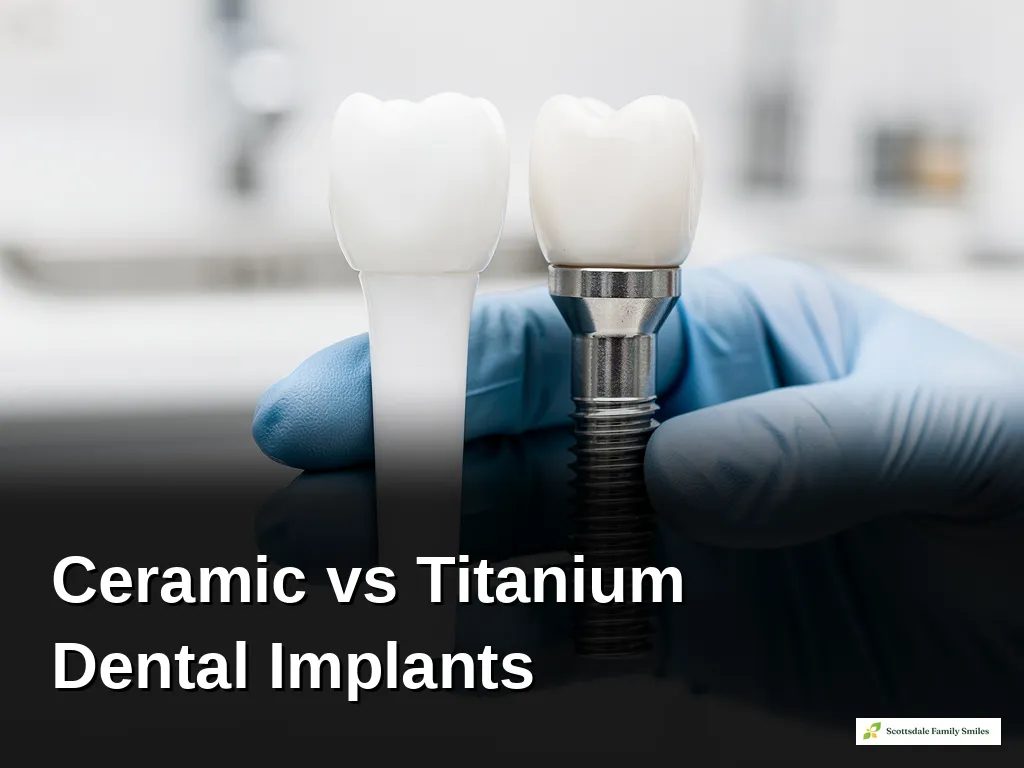
Replacing a missing tooth is about more than restoring your smile. It is an opportunity to restore comfort, function, confidence, and support your long-term oral health and overall well-being.
At Scottsdale Family Smiles, we believe dentistry should consider the health of the whole person, not simply the condition of their teeth. The materials we introduce into the body deserve thoughtful consideration, particularly when they are intended to remain there for many years.
While titanium dental implants have a long history of clinical success, advances in ceramic implant technology have provided patients with a metal-free alternative in the form of zirconia dental implants.
Emerging research into the relationship between implant materials, immune system responses, and chronic inflammation provides additional considerations when selecting a dental implant.
Understanding these differences allows you to make an informed decision that reflects your individual health needs, personal values, and long-term wellness goals.
Why Does Dental Implant Material Matter for Your Health?
A dental implant is an artificial tooth root placed within the jawbone to support a replacement tooth, bridge, or other dental restoration. Through a natural healing process called osseointegration, the surrounding bone forms a stable connection with the implant.
Because dental implants become an integral part of the body, their selection should involve more than mechanical strength and durability alone.
Important considerations include:
- Biological compatibility with surrounding tissues
- Immune system interactions and inflammatory responses
- Chemical stability and resistance to corrosion
- Potential release of particles into surrounding tissues
- Gum and bone health
- Individual health history and material sensitivities
- Long-term mechanical stability
- Aesthetic appearance
- Personal preferences regarding dental materials
Our approach to biological dentistry recognizes that every patient is unique. Rather than applying the same treatment philosophy to everyone, we take the time to understand your health history, concerns, and expectations before recommending treatment.
What Are Ceramic Dental Implants?
Ceramic dental implants are made from zirconia, a high-strength, nonmetallic ceramic material used in modern restorative dentistry and other medical applications.
Zirconia offers an alternative for individuals who prefer to avoid metallic materials in their dental restorations. Its natural white color, favorable biocompatibility, and chemical stability make it an appealing option for patients seeking a biologically conscious approach to tooth replacement.
Benefits of Zirconia Ceramic Dental Implants
A metal-free alternative
Zirconia implants provide an option for patients who prefer to minimize their exposure to metallic materials or who have concerns about metal sensitivities and their potential biological effects.
Favorable biocompatibility
Zirconia has demonstrated favorable compatibility with bone and surrounding gum tissue. Its chemical stability and resistance to metallic corrosion make it an attractive material in biological dentistry.
Avoidance of titanium particle release
Unlike titanium implant fixtures, zirconia fixtures do not release titanium particles or ions into surrounding tissues. This eliminates one potential source of material-related immune stimulation.
Support for healthy gum tissue
Research suggests that certain zirconia surfaces may accumulate less bacterial plaque than comparable titanium surfaces. This characteristic may offer advantages for soft-tissue health, although long-term outcomes also depend on implant design, surgical placement, oral hygiene, and individual healing.
Natural aesthetics
The white color of zirconia closely resembles the natural color of a tooth root. This can be particularly beneficial for patients with thin or translucent gum tissue or when replacing teeth in highly visible areas of the smile.
Alignment with whole-body wellness
For patients who are mindful of the materials used in their healthcare, ceramic implants offer a restorative option that may better align with their personal health philosophy.
What Are Titanium Dental Implants?
Titanium dental implants have been used successfully for decades and remain a well-established option in conventional implant dentistry.
Titanium's ability to integrate with living bone has made it a reliable material for replacing missing teeth. Its mechanical strength, versatility, and extensive clinical research support its use in a wide variety of restorative situations.
Benefits of Titanium Dental Implants
Extensive clinical research
Titanium implants have a substantial body of long-term clinical evidence supporting their effectiveness and durability.
Mechanical strength and versatility
Titanium combines strength with greater fracture toughness than ceramic materials, making it suitable for a broad range of restorative applications.
Predictable bone integration
Decades of research have helped dental professionals develop well-established protocols for titanium implant placement and healing.
Despite these advantages, titanium is not entirely biologically inert. Research has identified potential concerns involving metallic particle release, corrosion, and immune system interactions that deserve consideration when selecting an implant material.
Titanium Dental Implants, the Immune System, and Chronic Inflammation
An increasingly important area of research in implant dentistry is osteoimmunology, the study of how bone biology and the immune system interact.
Although titanium is generally considered biocompatible, microscopic titanium particles and ions can be released into surrounding tissues through mechanical wear, implant placement, and corrosion.
These particles may interact with immune cells, including macrophages, and stimulate the production of inflammatory signaling molecules.
Researchers have investigated several inflammatory mediators in relation to implanted materials, including:
- Tumor necrosis factor-alpha (TNF-α)
- Interleukin-1 beta (IL-1β)
- Interleukin-6 (IL-6)
- RANTES/CCL5
While inflammation is a normal and essential part of healing, excessive or persistent inflammatory activity may contribute to tissue damage, altered bone metabolism, and complications surrounding dental implants.
From a biological dentistry perspective, understanding these potential interactions is important when selecting materials intended to remain in the body for many years.
What Is RANTES/CCL5 and Why Does It Matter?
RANTES, also known as CCL5 (C-C motif chemokine ligand 5), is a naturally occurring immune signaling protein called a chemokine.
Its primary function is to help recruit immune cells to areas of injury, infection, or inflammation. This process plays an important role in protecting the body and supporting normal immune function.
However, excessive or persistent RANTES/CCL5 activity has been implicated in chronic inflammatory processes.
Scientific literature has explored the involvement of dysregulated RANTES/CCL5 signaling in conditions including:
- Rheumatoid arthritis
- Multiple sclerosis and neuroinflammation
- Certain autoimmune and immune-mediated disorders
- Cardiovascular inflammation and atherosclerosis
- Chronic inflammatory tissue conditions
- The progression of certain cancers
The relationship between RANTES/CCL5 and these conditions is complex. Its presence does not necessarily indicate disease, nor does an elevated level establish that a particular dental material is responsible for a systemic health condition.
Nevertheless, understanding how implanted materials may influence inflammatory signaling provides an additional perspective when evaluating dental implant biocompatibility.
What Does Research Reveal About Titanium Dental Implants and RANTES/CCL5?
A 2018 peer-reviewed study published in the EPMA Journal by Lechner, Noumbissi, and von Baehr investigated the relationship between titanium dental implants, titanium particle release, and inflammatory signaling within the jawbone.
Researchers examined abnormal jawbone tissue surrounding titanium implants in 14 patients and compared it with healthy jawbone tissue from 19 control patients.
The affected tissue samples demonstrated average RANTES/CCL5 concentrations approximately 30 times higher than those of the healthy jawbone samples.
The researchers proposed a potential relationship between released titanium particles, TNF-α signaling, and persistent RANTES/CCL5 expression.
These findings raise important questions about whether titanium-related immune stimulation may contribute to chronic inflammatory signaling in certain patients, particularly in areas where normal bone healing has been compromised.
However, the study involved a small, selected patient population with pre-existing abnormal jawbone tissue. It did not establish that titanium implants routinely produce this response, that titanium was the sole cause of the observed abnormalities, or that these changes lead to systemic disease.
Further independent research is needed to determine how frequently these responses occur and their long-term clinical significance.
For patients seeking a more biologically conscious approach to dentistry, these findings provide another reason to consider the potential advantages of nonmetallic implant materials.
What Has the FDA Reported About Titanium and Metal Implants?
The United States Food and Drug Administration (FDA) has investigated the biological responses associated with implanted metallic medical devices, including titanium-based devices.
In its 2019 report, Biological Responses to Metal Implants, the FDA examined potential adverse biological responses associated with metallic implants and their degradation products.
Areas of concern include:
- Local inflammatory responses
- Metallic particle and ion release
- Immune system activation
- Material hypersensitivity
- Adverse tissue reactions
- Potential systemic biological responses
The FDA has also commissioned a titanium-specific medical device material safety review to further evaluate the available scientific evidence and identify gaps in our understanding of titanium's biological effects.
These evaluations recognize that although metallic implants are successfully tolerated by many patients, individual biological responses can vary.
The FDA's broader investigation of metal-related inflammatory responses, together with independent research examining RANTES/CCL5 expression around titanium dental implants, highlights the importance of continuing to study how implanted materials interact with the human body.
It is important to distinguish these findings: the specific association between titanium dental implants and markedly elevated RANTES/CCL5 in abnormal jawbone tissue comes from published clinical research. A specific FDA determination establishing titanium-induced RANTES/CCL5 elevation as a cause of systemic disease has not been established.
At Scottsdale Family Smiles, we believe that established clinical evidence and emerging biological research both deserve thoughtful consideration when helping patients make informed healthcare decisions.
Could Ceramic Dental Implants Offer a Biological Advantage?
Zirconia ceramic dental implants provide a nonmetallic alternative that avoids titanium-specific particle and ion release from the implant fixture.
For patients who are concerned about metal sensitivity, immune system interactions, or chronic inflammation, this distinction may be meaningful.
Potential biological advantages of zirconia include:
- Resistance to metallic corrosion
- Absence of titanium particle release from the ceramic fixture
- Favorable compatibility with bone and gum tissue
- Potentially reduced bacterial adhesion on certain implant surfaces
- Avoidance of galvanic interactions originating from a metallic implant fixture
Ceramic implants cannot eliminate every potential inflammatory response. Any implanted material can interact with surrounding tissues, and inflammation may occur as a result of bacterial infection, mechanical stress, surgical trauma, or individual healing factors.
Current research also does not establish that zirconia implants consistently produce lower RANTES/CCL5 levels or prevent systemic inflammatory diseases.
However, choosing a fully metal-free implant system removes titanium-related exposure as one potential contributing factor.
Our preference for thoughtfully selected, biocompatible materials reflects our commitment to considering how dental restorations may interact with each patient's unique biology.
Ceramic vs. Titanium Dental Implants: A Side-by-Side Comparison
| Consideration | Ceramic (Zirconia) Implants | Titanium Implants |
|---|---|---|
| Material composition | Nonmetallic zirconia ceramic | Titanium or titanium alloy |
| Biocompatibility | Favorable | Generally favorable |
| Aesthetic appearance | Natural white color | Metallic gray color |
| Osseointegration | Demonstrated bone integration | Extensive clinical evidence |
| Metallic corrosion | Not subject to metallic corrosion | Corrosion and ion release are possible |
| Titanium particle release | Absent from zirconia fixture | Possible through wear and corrosion |
| Immune system interactions | Biological responses remain possible | Particle-related inflammatory responses documented |
| RANTES/CCL5 expression | Direct comparative research remains limited | Elevated levels reported in selected abnormal jawbone tissue |
| Bacterial adhesion | Potentially lower on certain surfaces | Varies with surface characteristics |
| Material sensitivity | Avoids titanium-specific sensitivity | Sensitivity reactions have been reported |
| Mechanical properties | Strong, rigid ceramic | Greater fracture toughness |
| Clinical research | Growing body of evidence | Extensive long-term clinical evidence |
| Whole-body wellness | Aligns with metal-free treatment preferences | Systemic effects of particle release remain under investigation |
Both materials can provide successful tooth replacement when appropriately selected, placed, restored, and maintained.
The most appropriate choice depends on individual clinical circumstances, health considerations, and personal preferences.
Which Dental Implant Material Is Better for Gum and Bone Health?
The long-term success of a dental implant depends greatly on the health of the surrounding bone and gum tissue.
Both titanium and zirconia implants have demonstrated the ability to integrate with the jawbone. Zirconia has also shown promising soft-tissue compatibility and may offer aesthetic and biological advantages in selected situations.
However, implant material is only one part of successful healing.
Other important factors include:
- The quality and quantity of available bone
- Existing gum and periodontal health
- The presence of infection or inflammation
- Surgical technique and implant positioning
- Nutritional status, including vitamin D sufficiency
- Overall metabolic health
- Tobacco use and other lifestyle factors
- Bite forces and teeth-grinding habits
- Long-term oral hygiene and professional maintenance
At Scottsdale Family Smiles, we believe that creating favorable conditions for healing is just as important as selecting the implant itself.
Our biological approach considers the environment in which an implant will be placed, with an emphasis on preserving healthy tissues, supporting the body's natural healing processes, and establishing a healthy foundation for long-term function.
How Biological Dentistry Approaches Dental Implant Treatment
Biological dentistry recognizes the interconnected relationship between oral health and overall well-being.
When considering dental implant treatment, our focus extends beyond simply replacing a missing tooth. We consider your health history, the condition of your oral tissues, your individual healing capacity, and the materials that will be used throughout your restoration.
Our approach includes thoughtful consideration of several important areas.
Preserving Natural Teeth Whenever Possible
When a natural tooth can be predictably preserved in a healthy and functional condition, conservative treatment may be the preferred approach.
Dental implants are valuable restorative options, but they should not replace healthy natural teeth unnecessarily.
Supporting the Body's Natural Healing Processes
Successful implant treatment begins with establishing conditions that support healthy bone and soft-tissue healing.
We consider factors that may influence healing, including nutritional status, existing inflammation, oral infection, and overall health.
When clinically appropriate, regenerative techniques such as platelet-rich fibrin (PRF) may be incorporated into treatment to support tissue healing.
PRF is derived from a patient's own blood and contains a fibrin matrix, platelets, and naturally occurring signaling molecules involved in tissue repair.
Thoughtful Selection of Dental Materials
We consider the biological and mechanical properties of the materials used throughout the restoration, including the implant fixture, abutment, connecting components, and final crown.
For patients seeking a metal-free approach, evaluating the entire restorative system is important.
Individualized Treatment Planning
No two patients are biologically identical. Medical history, bone anatomy, functional needs, healing capacity, and personal health priorities all influence treatment recommendations.
Our goal is to help you make informed decisions through education, open communication, and a collaborative approach to care.
We understand that some patients come to us after experiencing dental complications, while others are proactively seeking a more health-conscious approach to dentistry.
Whatever brings you to our practice, your concerns and preferences deserve to be heard and respected.
Are Ceramic Dental Implants Right for You?
Zirconia dental implants may be worth considering if you:
- Prefer a metal-free approach to dental treatment.
- Have concerns about metallic particle release or corrosion.
- Have a history of suspected metal sensitivities.
- Are concerned about material-related inflammatory responses.
- Have thin gum tissue and desire a natural aesthetic result.
- Value thoughtful material selection as part of your overall wellness.
- Are seeking a biological or holistic approach to replacing missing teeth.
Patients living with autoimmune or chronic inflammatory conditions may also wish to discuss implant material selection with their dental and medical healthcare providers.
While a metal-free approach may align with their personal health priorities, there is currently insufficient evidence to conclude that ceramic implants prevent or improve autoimmune diseases.
Ceramic implants may not be appropriate for every clinical situation. Bone anatomy, implant location, bite forces, available restorative options, and individual health factors all influence treatment recommendations.
A comprehensive evaluation allows us to determine whether ceramic implants are an appropriate choice for your needs.
Frequently Asked Questions About Ceramic and Titanium Dental Implants
Are ceramic dental implants safer than titanium implants?
Both zirconia and titanium are generally considered biocompatible implant materials.
Zirconia provides a nonmetallic alternative that avoids titanium-specific particle release, metallic corrosion, and potential titanium-related sensitivity reactions.
While these characteristics may offer meaningful advantages for certain patients, current evidence does not establish that ceramic implants are universally safer or provide superior systemic health outcomes.
The most appropriate material depends on individual health history and clinical circumstances.
Can titanium dental implants cause chronic inflammation?
Titanium particles and ions released from dental implants have demonstrated the ability to stimulate inflammatory responses under certain conditions.
Research has also identified elevated levels of inflammatory signaling molecules, including RANTES/CCL5, in selected abnormal jawbone tissues surrounding titanium implants.
These findings suggest a potential mechanism through which titanium particles may contribute to persistent inflammatory signaling. However, the frequency and long-term systemic significance of these responses remain under investigation.
Can titanium dental implants increase RANTES/CCL5 levels?
A 2018 clinical study reported approximately 30-fold higher average RANTES/CCL5 concentrations in jawbone tissue surrounding titanium implants compared with healthy jawbone controls.
The researchers proposed that titanium particle release and associated immune signaling may contribute to this response.
These findings are relevant to biological dentistry and implant material selection, although larger independent studies are needed to establish causality, prevalence, and clinical significance.
Has the FDA warned about titanium dental implants?
The FDA has investigated potential adverse biological responses associated with metallic medical implants, including inflammation, hypersensitivity, corrosion, and the release of metallic particles and ions.
These investigations do not constitute a general recommendation against titanium dental implants. Titanium remains a widely used implant material with substantial clinical evidence supporting its effectiveness.
The FDA's research does, however, reinforce the importance of understanding individual biological responses to implanted materials.
Can titanium dental implants contribute to autoimmune diseases?
Certain inflammatory signaling molecules associated with immune responses to implanted materials, including RANTES/CCL5, are also involved in autoimmune and chronic inflammatory conditions.
However, this shared biological pathway does not establish that titanium dental implants cause autoimmune disease.
Patients with autoimmune conditions or concerns about material sensitivities may benefit from individualized treatment planning and discussions with their healthcare providers.
Zirconia ceramic implants offer an alternative for individuals who prefer to avoid metallic implant materials.
Are zirconia dental implants completely metal-free?
Zirconia is zirconium dioxide, a ceramic compound rather than a metallic material.
Zirconia implant fixtures are commonly described as metal-free because they do not contain a metallic implant body.
For patients seeking a fully metal-free restoration, it is also important to consider the composition of the abutment, connecting components, and final crown.
Are ceramic implants as strong as titanium implants?
Zirconia is a high-strength ceramic material capable of supporting dental restorations under appropriate clinical conditions.
Titanium has greater fracture toughness and a more extensive history of long-term clinical use.
The suitability of either material depends on implant design, surgical positioning, bone quality, bite forces, and the type of restoration being supported.
How long do ceramic dental implants last?
Ceramic implants have demonstrated encouraging clinical outcomes and can provide many years of function.
Although the long-term research history of zirconia is not yet as extensive as that of titanium, advances in ceramic materials and implant design continue to expand their clinical applications.
The longevity of any dental implant depends on appropriate treatment planning, successful healing, overall health, and ongoing maintenance.
Can ceramic dental implants be used to replace molars?
Yes. Ceramic dental implants can be used to replace molars in appropriately selected patients.
Because molars experience significant chewing forces, careful evaluation of bone quality, implant dimensions, restorative design, and bite relationships is particularly important.
Should I replace my existing titanium implants with ceramic implants?
A healthy, well-functioning titanium implant does not necessarily need to be replaced simply because it contains metal.
Removing an integrated implant can involve additional surgery, loss of surrounding bone, and other complications.
If you have concerns about an existing titanium implant, we recommend a comprehensive evaluation of the surrounding tissues, implant stability, medical history, and any symptoms you may be experiencing.
Our conservative philosophy emphasizes preserving healthy tissues and avoiding unnecessary intervention. Decisions about implant replacement should be based on individual findings rather than material composition alone.
Ceramic Dental Implants in Scottsdale, Arizona
At Scottsdale Family Smiles, we offer zirconia ceramic dental implants as part of our commitment to biological, holistic, and patient-centered dentistry.
We believe that selecting a dental implant involves more than choosing a material that integrates with bone. It also involves thoughtful consideration of how that material may interact with surrounding tissues, the immune system, and the individual receiving treatment.
Our interest in ceramic dental implants reflects our commitment to biocompatible materials, conservative treatment, and supporting the body's natural healing processes.
Dr. Kamran Fattah and Dr. Julia Badea believe that meaningful dental care begins with listening. We take the time to understand your concerns, explain your options, and help you navigate treatment decisions with clarity and confidence.
Whether you are exploring tooth replacement for the first time, seeking a metal-free alternative to traditional dental implants, or looking for a second opinion, we welcome the opportunity to help.
Your dental health is an important part of your overall well-being. Our goal is to provide thoughtful, individualized care that respects both.
We invite you to schedule a consultation at our Scottsdale dental practice to explore your options and discover an approach to tooth replacement that aligns with your health, comfort, and long-term wellness goals.
Learn more in our why metal-free implants guide and dental implant FAQ.
Scientific References and Further Reading
- Lechner J, Noumbissi S, von Baehr V. Titanium implants and silent inflammation in jawbone—a critical interplay of dissolved titanium particles and cytokines TNF-α and RANTES/CCL5 on overall health? EPMA Journal. 2018;9:331–343. DOI: 10.1007/s13167-018-0138-6. Read the source
- U.S. Food and Drug Administration. Biological Responses to Metal Implants. September 2019.
- U.S. Food and Drug Administration / ECRI. Titanium: Medical Device Material Safety Summary. 2023.
- U.S. Food and Drug Administration. Dental Implants: What You Should Know. Read the source
This article is intended for educational purposes and is not a substitute for individualized dental or medical evaluation. Treatment recommendations should be based on each patient's clinical circumstances and health history.
Related Articles
Ready to Visit?
Call or text us, or request an appointment online.